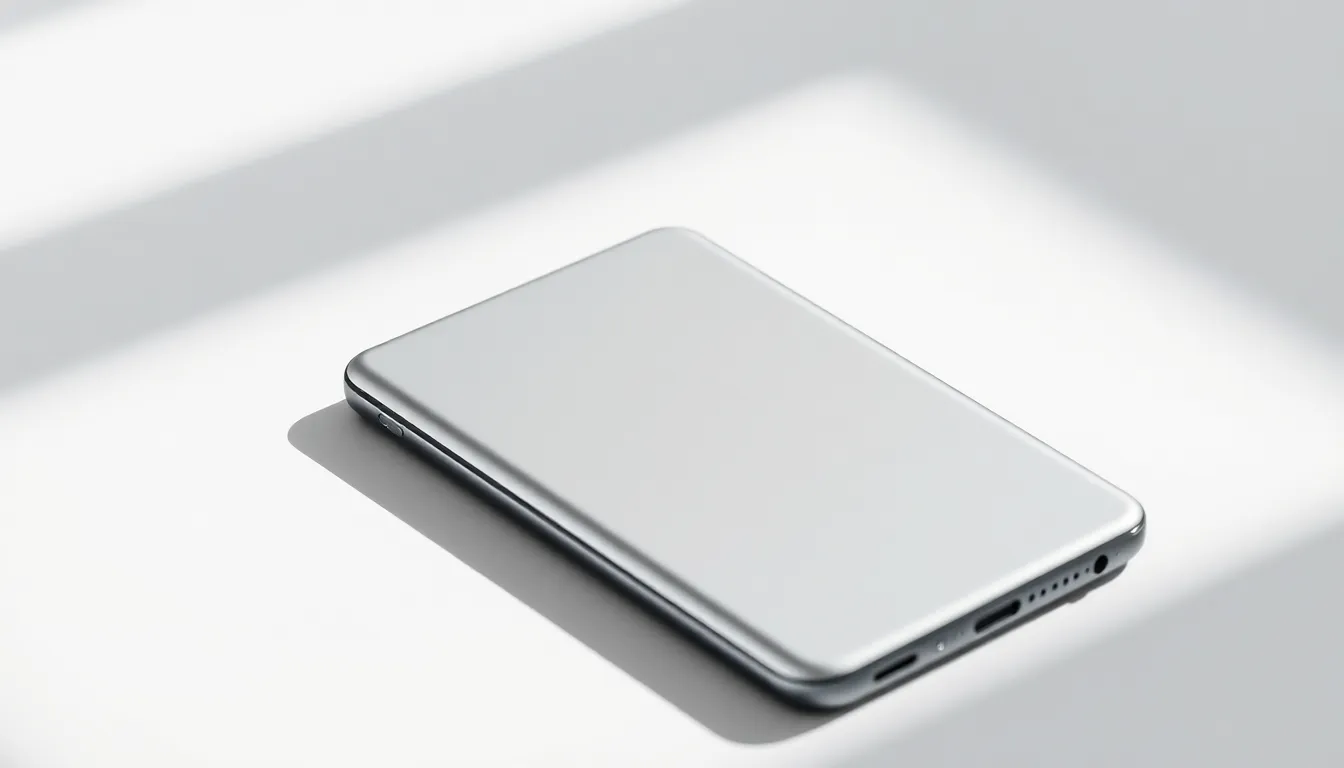
Xiaomi UltraThin Magnetic Power Bank 5000 15W: Slim Design Meets Real-World Testing
In the world of portable power, capacity ratings like 5,000mAh can be misleading. Two devices with the same label can differ dramatically in physical size, weight, and real-world performance. The Xiaomi UltraThin Magnetic Power Bank 5000 15W enters the market with a bold promise: to deliver substantial power in an exceptionally slim package. This analysis examines whether its innovative design compromises its charging capabilities.
Design and Technology: The Pursuit of Thinness
The most striking feature of the Xiaomi power bank is its physical profile. Measuring just 98.5 x 71.5 x 6.0mm and weighing only 98 grams, it represents a significant departure from traditional power bank designs. When placed beside another 5,000mAh power bank—which measures 108.0 x 70.0 x 14.4mm and weighs 180 grams—the difference is immediately apparent. The competitor's additional bulk is partly due to integrated features like a charging cable and kickstand, but the core of Xiaomi's achievement lies in its battery technology.
This slim form factor is enabled by a cutting-edge silicon-carbon battery with 16% silicon content. This advanced chemistry allows for higher energy density in a thinner package compared to conventional lithium-ion cells, making the device particularly appealing for users who prioritize portability and discreet carrying.
Performance Analysis: Capacity vs. Reality
To evaluate real-world performance, a controlled test was conducted using a smartphone with a 6,100mAh battery. The phone was discharged to 20% before each test, and both power banks were used in their most efficient mode: wired USB-C charging. While both support up to 15W wireless charging, wired connections minimize energy losses and provide the fairest comparison of their inherent capabilities.
The Xiaomi power bank supports up to 22.5W output over USB-C, while the competing model offers up to 30W. In the test, this speed difference translated to tangible results. The competitor charged the test phone from 20% to 41% in approximately 15 minutes, while the Xiaomi unit required about 20 minutes to reach the same level. Throughout the charging cycle, the competitor maintained a roughly 35% faster charging speed, consistent with its higher power rating.
Efficiency and Total Energy Delivery
The charging test revealed important differences in total energy delivery. The competing power bank depleted after one hour of charging, bringing the test phone to 84% battery. The Xiaomi power bank took 19 minutes longer to fully discharge, ultimately charging the phone to 79%.
Calculations based on the phone's battery capacity and charge percentage gains indicate the competitor delivered approximately 3,900mAh of effective capacity, while the Xiaomi unit delivered about 3,600mAh. This represents an 8.5% advantage for the competitor in terms of actual energy transferred to the device. This discrepancy highlights that nominal capacity ratings (5,000mAh) don't account for conversion inefficiencies when transferring power between batteries.
Magnetic Functionality and Device Compatibility
As a magnetic power bank, the Xiaomi unit is designed to attach securely to compatible smartphones, primarily recent iPhone models. The slim 6mm profile makes it particularly suitable for this application, as it adds minimal bulk when attached. Visual demonstrations show it adhering cleanly to an iPhone, maintaining a relatively streamlined appearance compared to bulkier magnetic alternatives. This feature positions it as a convenient on-the-go solution for users within the Apple ecosystem who need quick top-ups without cables.
Conclusion: Trade-offs in Portable Power
The Xiaomi UltraThin Magnetic Power Bank 5000 15W successfully delivers on its primary design promise: exceptional slimness and light weight. Its silicon-carbon battery technology enables a form factor that's roughly half the thickness of some competitors, making it one of the most portable 5,000mAh options available. For users who value discreet carry and minimal pocket bulge, this is a significant advantage.
However, this ultra-slim design comes with measurable performance trade-offs. In wired charging tests, it delivered slightly less total energy (approximately 8.5% less) and slower charging speeds compared to a bulkier competitor with the same nominal capacity. The choice ultimately depends on user priorities: maximum portability and sleek magnetic attachment versus slightly faster charging and marginally higher effective capacity. For everyday carry where thinness is paramount, the Xiaomi power bank offers a compelling, technologically advanced solution, demonstrating that in power banks, physical size and effective size are indeed two different measurements.