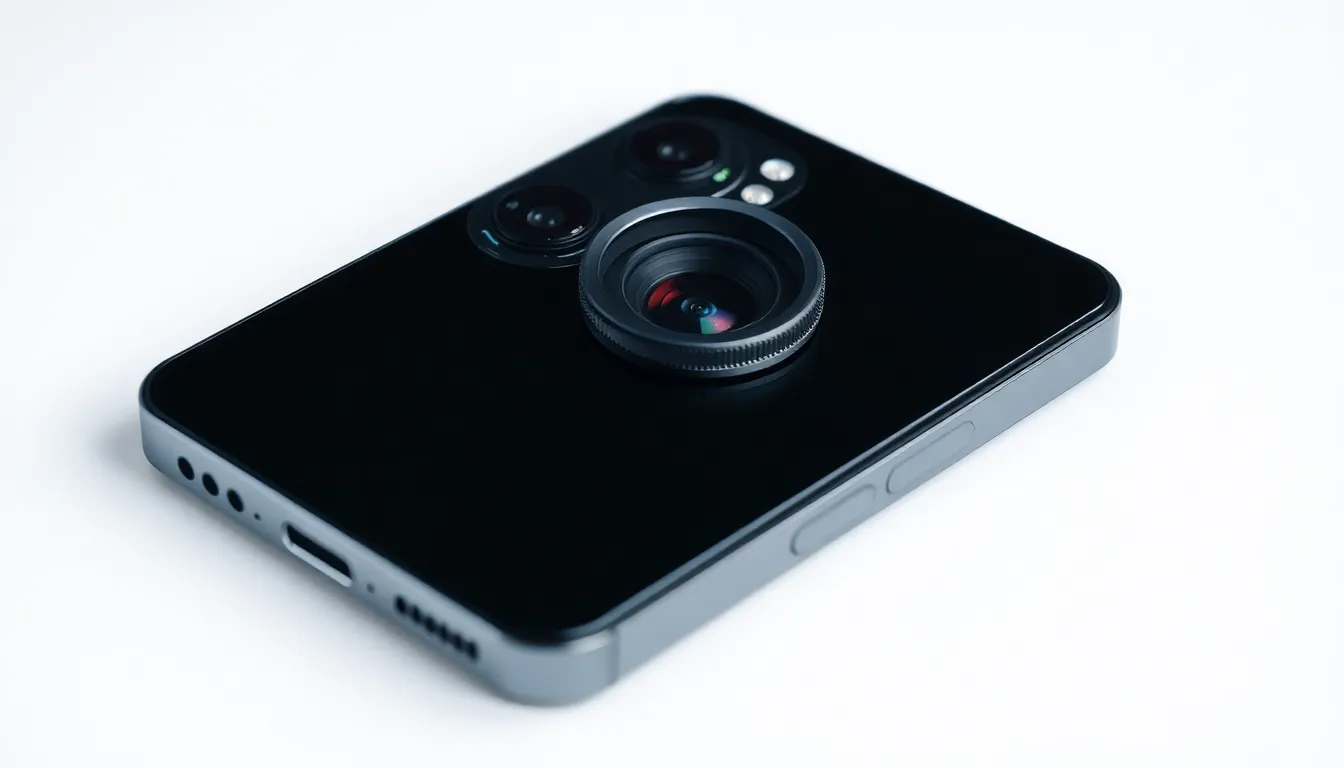
Vivo X300 Ultra Debuts Samsung's Enhanced 200MP Camera Technology
In the competitive landscape of flagship smartphones, camera capabilities continue to be a primary battleground. The latest development comes from Vivo, which has integrated an upgraded 200-megapixel camera sensor from Samsung into its new X300 Ultra. This move represents both an evolution of Samsung's high-resolution sensor technology and a deepening partnership between the two manufacturers.
The ISOCELL HP0: A Customized 200MP Sensor
The heart of the X300 Ultra's telephoto camera system is the Samsung ISOCELL HP0 sensor, a customized version of the ISOCELL HPB that debuted last year. This 1/1.4-inch sensor has been specifically tailored for Vivo as part of Samsung's collaborative efforts with the Chinese brand. The sensor incorporates Vivo's proprietary BlueImage technology, which aims to deliver improvements in several key photographic areas including autofocus performance, color accuracy, HDR processing, and power efficiency.
What makes this implementation particularly noteworthy is how it builds upon Samsung's pioneering work with 200MP mobile sensors. Samsung first introduced 200MP camera technology in a Motorola device before incorporating it into its own Galaxy S23 Ultra. Since then, several Chinese smartphone manufacturers have adopted similar high-resolution sensors, but the X300 Ultra represents the first implementation of this specifically enhanced version.
Enhanced Stabilization and Video Capabilities
Beyond the sensor itself, Vivo has paired the ISOCELL HP0 with a significantly improved optical image stabilization system. The new OIS offers up to 3-degree stabilization, a substantial upgrade from the 1.2-degree stabilization found in the previous Vivo X200 Ultra. This enhancement reportedly enables CIPA 7.0-level stabilization, allowing for longer shutter times without introducing camera shake. The practical result should be noticeably better image quality with reduced noise, particularly in low-light conditions.
The telephoto camera also demonstrates improved focus tracking capabilities when recording 4K video at 60 frames per second, making it better suited for capturing moving subjects. Additionally, the X300 Ultra supports Samsung's APV codec for video recording, a feature it shares with the upcoming Galaxy S26 Ultra. This suggests that both companies are working to push the boundaries of mobile video quality through advanced compression technology.
Complete Camera System and Market Position
The 200MP telephoto camera is part of a comprehensive imaging system in the X300 Ultra. The device also features a 1/1.2-inch 200MP Sony LYTIA-901 primary camera sensor with dual-pixel autofocus and OIS, a 50MP ultrawide camera with both autofocus and stabilization, and a 50MP front-facing camera with autofocus. This configuration enables video recording up to 4K resolution at 120 frames per second, positioning the device as a serious contender in the premium smartphone video recording space.
Scheduled to launch initially in China before expanding to markets including Europe and India, the Vivo X300 Ultra will compete directly with other flagship devices such as the Galaxy S26 Ultra, iPhone 17 Pro Max, OPPO Find X9 Ultra, and Xiaomi 17 Ultra. The inclusion of Samsung's enhanced sensor technology represents a strategic move to differentiate Vivo's offering in this crowded premium segment.
Conclusion: Advancing Mobile Photography Through Collaboration
The Vivo X300 Ultra's camera system demonstrates how strategic partnerships between smartphone manufacturers and sensor developers can drive meaningful advancements in mobile photography. By customizing Samsung's 200MP technology with its own BlueImage enhancements and pairing it with improved stabilization hardware, Vivo has created a camera system that builds upon established high-resolution sensor technology while adding practical improvements for real-world use.
This implementation suggests that the future of flagship smartphone cameras may increasingly involve such collaborative efforts, where sensor manufacturers work closely with device makers to optimize technology for specific implementations. As the X300 Ultra prepares to enter global markets, it represents not just another high-resolution camera phone, but a case study in how specialized partnerships can yield tangible photographic improvements beyond mere megapixel counts.