The Technical and Cost Reasons Behind Thick Bezels on Budget Galaxy Phones
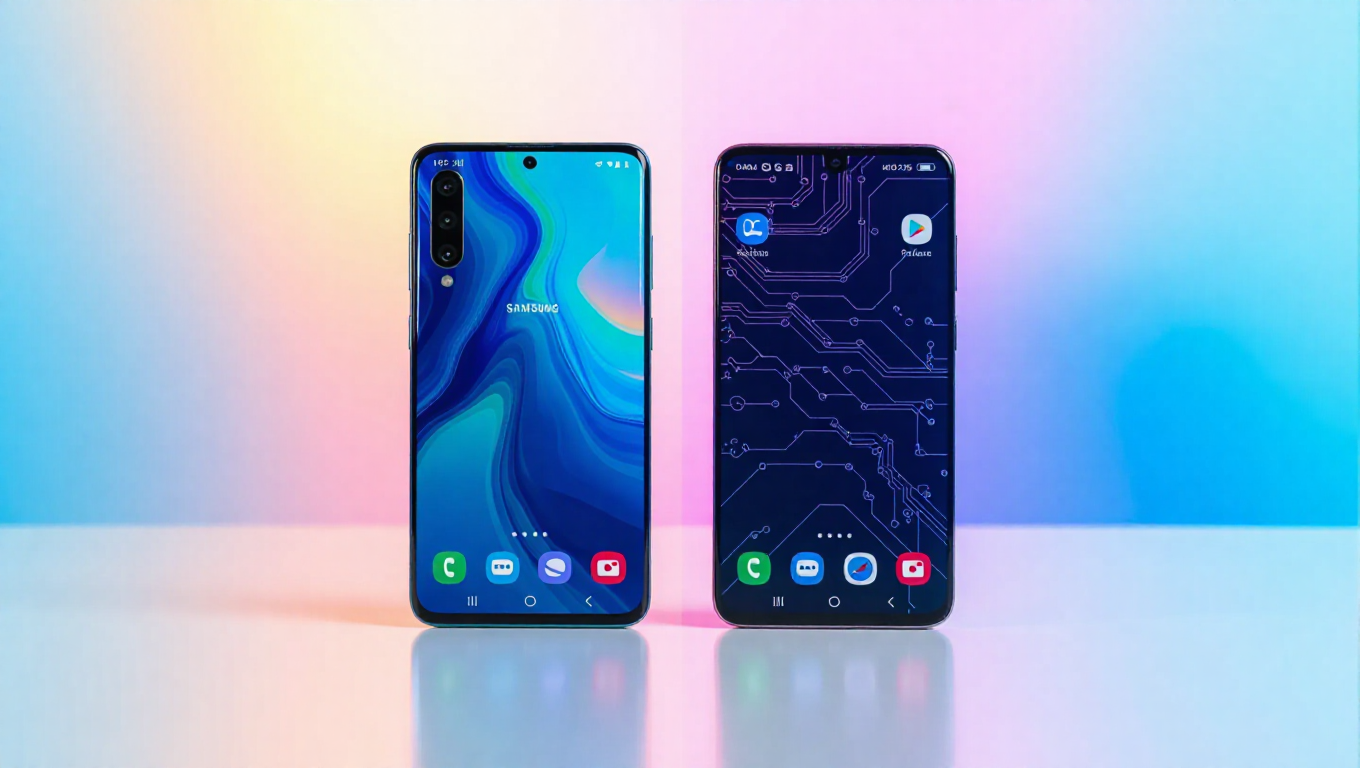
When comparing Samsung's premium Galaxy S series to its more affordable A series, one noticeable design difference often stands out: the thicker bottom bezel, or "chin," on budget models. This distinction isn't merely an aesthetic choice to differentiate product tiers but stems from fundamental technical and economic factors in smartphone manufacturing.
Display Technology: Rigid vs. Flexible Panels
The primary reason for thicker bezels on budget Galaxy phones lies in the type of display technology used. Smartphone displays require connectors at the bottom to link the panel to the device's motherboard. In cheaper models, which typically use rigid LCD or OLED panels, these connectors need physical space, resulting in a thicker lower bezel to accommodate the hardware.
Premium Galaxy models overcome this limitation by employing flexible OLED panels. Unlike foldable screens, these panels feature a subtle inward bend at the bottom, hidden within the phone's chassis. This bend allows the connectors to reach the motherboard without requiring extra bezel space, enabling the uniform, edge-to-edge look associated with high-end devices.
The Cost Barrier of Flexible OLED
If flexible OLED technology provides a solution for uniform bezels, why isn't it used across all Galaxy phones? The answer largely revolves around cost. Manufacturing flexible OLED panels can be 30% to 100% more expensive than producing rigid OLED panels of similar quality. For budget-oriented devices, this cost increase would significantly impact the final price, potentially making them less competitive in their market segment.
While manufacturing costs for flexible OLED have gradually declined as adoption increases, the technology remains prohibitively expensive for most affordable smartphones. Samsung's focus on budget devices often prioritizes other features, such as extended software support and durability, over achieving uniform bezels. Eliminating the chin might push prices beyond what consumers expect from entry-level or mid-range models.
Market Context and Future Possibilities
Some competing brands have managed to incorporate more uniform bezels into lower-cost devices, suggesting that technical barriers can be overcome with different design or manufacturing approaches. However, each manufacturer balances priorities differently. For Samsung, maintaining affordability while delivering reliable performance and support often takes precedence over achieving a completely bezel-less design on budget phones.
Looking ahead, as flexible OLED production becomes more efficient and costs continue to decrease, it's possible that uniform bezels could trickle down to more affordable Galaxy models. Until then, the thick display chin serves as a visible reminder of the trade-offs necessary to keep budget smartphones accessible to a wider audience.
Conclusion
The persistence of thicker bottom bezels on budget Galaxy phones isn't a deliberate design limitation but a reflection of practical constraints. Rigid display panels, while cost-effective, require physical space for connectors, leading to the characteristic chin. Flexible OLED technology offers a solution but comes at a premium that conflicts with the goal of affordability. As smartphone technology evolves, the balance between cost, design, and functionality will continue to shape the aesthetics of devices across price points, with uniform bezels remaining a hallmark of premium models for the foreseeable future.