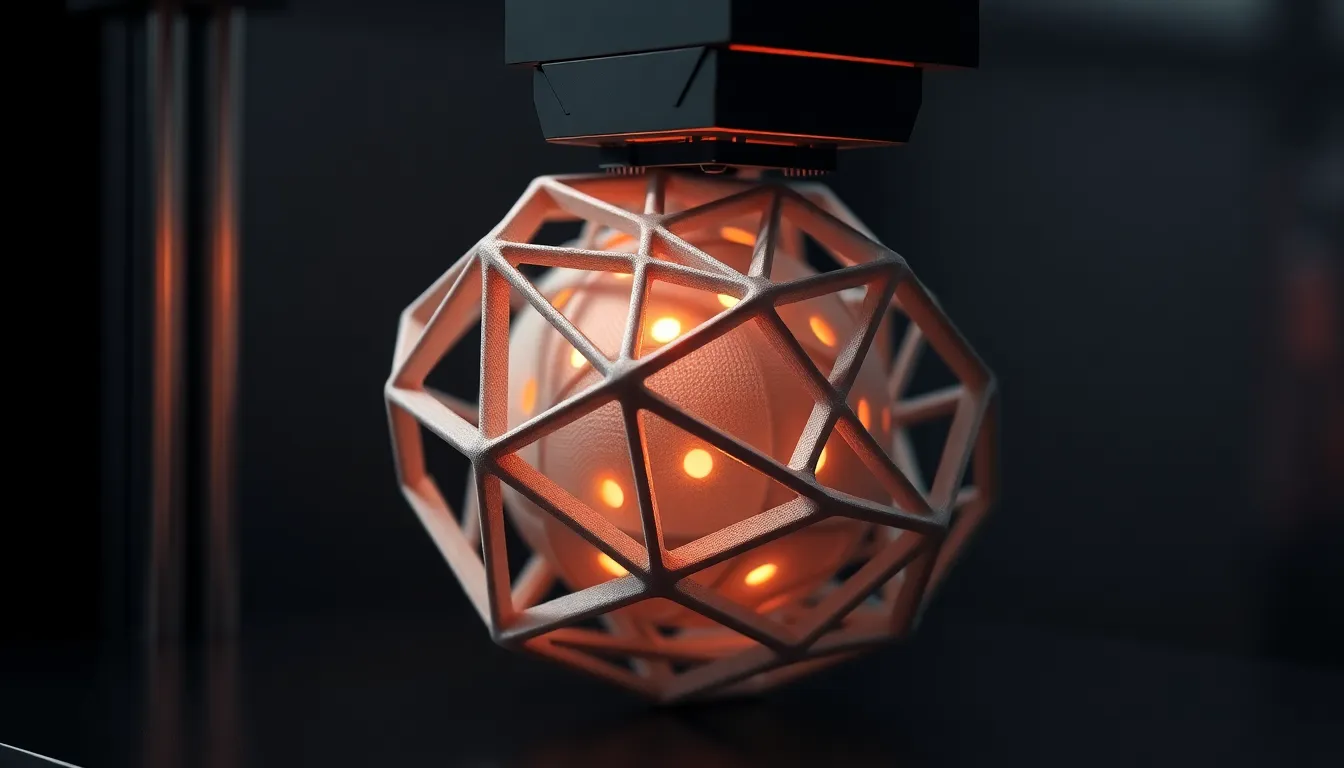
Supports in 3D Printing: From Scaffolding to Strategic Design Element
In the world of 3D printing, supports have long been treated as a necessary evil—temporary structures that hold up overhangs and bridges during the printing process, only to be discarded once the print is complete. However, a growing understanding among designers and engineers reveals that supports are far more than just disposable scaffolding. They represent a critical design decision that affects everything from surface finish to structural integrity and post-processing requirements.
The Evolution of Support Structures
Traditionally, supports were viewed as a checkbox item in slicing software—something to enable when the software flagged potential printing issues. This approach treated supports as a rescue tool rather than an integral part of the design process. The common practice was to let the slicer automatically generate supports wherever it detected overhangs exceeding a certain angle, typically 45 degrees or more.
This automated approach, while convenient, often leads to suboptimal results. Supports don't merely hold plastic in place during printing; they directly influence where surfaces will appear rough, where warping might occur, and where cleanup could potentially damage the final part. The interface between support material and the printed object leaves distinct marks that can compromise both aesthetics and functionality.
Supports as Design Parameters
Forward-thinking designers now approach supports as deliberate design parameters rather than afterthoughts. By considering support requirements early in the design phase, they can optimize part orientation, modify geometries to minimize support needs, and strategically place supports where they'll cause the least damage during removal.
This shift in perspective recognizes that every support contact point represents a trade-off. While supports prevent failed prints by providing necessary structural support during fabrication, they also create surfaces that require additional finishing work. The strategic placement of supports can mean the difference between a part that looks professionally manufactured and one that appears amateurish.
Material and Technology Considerations
The relationship between supports and design becomes even more complex when considering different printing materials and technologies. Soluble supports in dual-extrusion systems offer cleaner results but require additional equipment and materials. Breakaway supports work well with certain materials but can damage delicate features. Tree supports, a more recent innovation, use branching structures that minimize contact points while providing necessary support.
Each support strategy carries implications for print time, material usage, and post-processing requirements. Designers must weigh these factors against the functional and aesthetic requirements of their final product, making informed decisions about when and where to incorporate supports.
The Future of Support-Conscious Design
As 3D printing technology advances, the line between supports and primary structure continues to blur. Some emerging approaches treat supports as temporary functional elements that serve multiple purposes during printing, while others explore support-free printing through advanced cooling systems and material formulations.
The most successful designs will be those that treat supports not as problems to be solved, but as opportunities to be optimized. By integrating support considerations into the initial design phase, creators can produce parts that are not only structurally sound but also aesthetically pleasing and efficient to manufacture.
Ultimately, the evolution of support thinking reflects the maturation of 3D printing as a manufacturing technology. What began as a technical necessity has become a sophisticated design consideration, separating casual users from professional practitioners and enabling more complex, reliable, and beautiful printed objects.