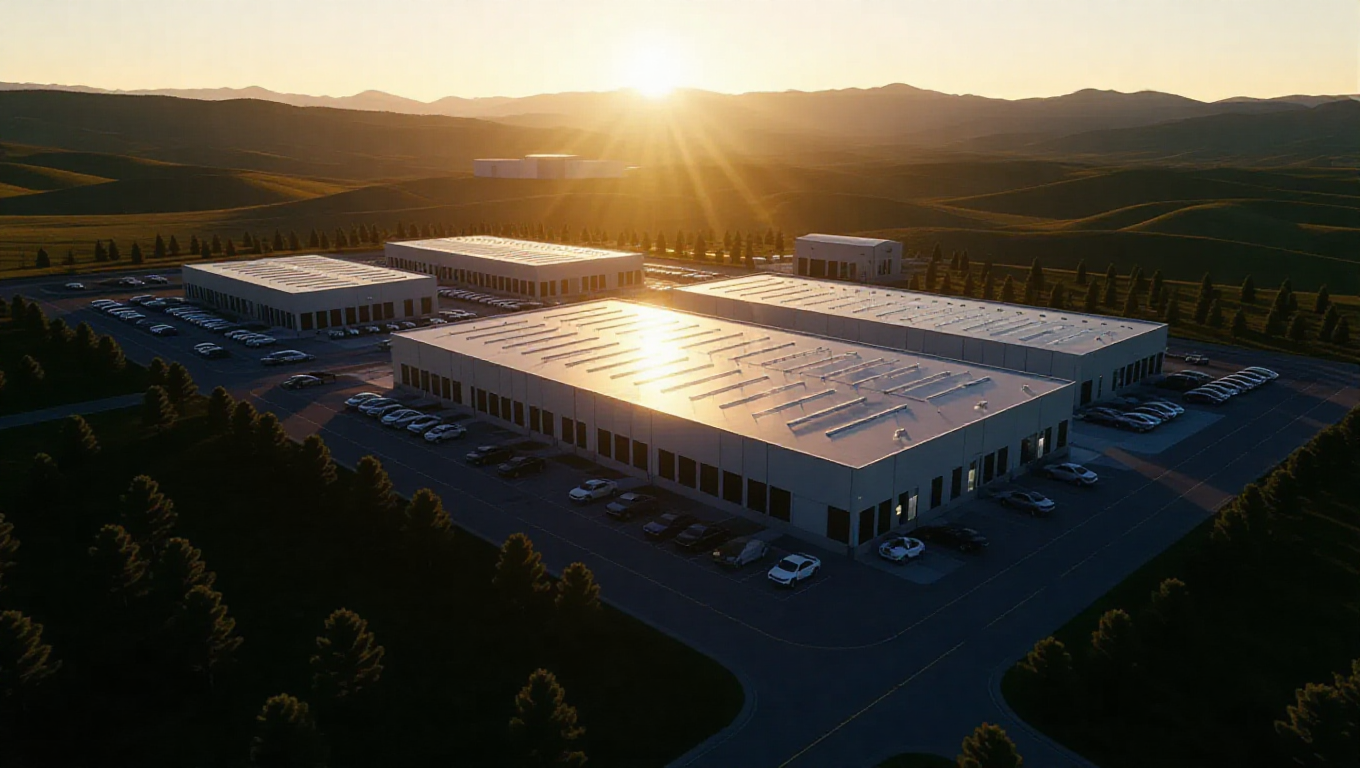
Samsung SDI's US EV Battery Venture Faces Uncertainty as Partner Stellantis Considers Exit
Samsung SDI, a global leader in battery manufacturing for consumer electronics and electric vehicles, finds its ambitious US-based EV battery production plans at a crossroads. A joint venture established with automotive giant Stellantis just a few years ago is now reportedly in jeopardy, casting doubt on the future of a significant manufacturing operation in Indiana.
A Promising Partnership Now Under Strain
The collaboration between Samsung SDI and Stellantis was announced in 2021, marking a strategic move to secure battery supply for the automaker's expansive portfolio of brands, which includes Jeep, Dodge, Chrysler, Fiat, and Maserati. The partnership led to the establishment of an EV battery manufacturing plant in Indiana, with plans solidified in 2023 for a second facility in the United States, signaling strong initial confidence and growth trajectory.
However, the landscape of the electric vehicle industry has shifted dramatically. Stellantis recently announced writedowns exceeding $26.5 billion, a clear indicator that its substantial investment in electric vehicles has not yielded the expected returns. In response, the company is significantly scaling back its EV ambitions, a strategic retreat that has direct implications for its battery supply partnerships.
Reports of an Impending Split
Recent financial reports indicate that Stellantis is seeking to exit its US EV battery joint venture with Samsung SDI. The potential departure, driven by mounting losses in its electric vehicle division, could prove financially costly for the automaker. It is suggested that Stellantis may opt to sell its stake in the venture to a third party as a method of extrication.
This development places the future of the Indiana battery plant, and the planned second facility, into question. The joint venture was specifically designed to feed battery cells into Stellantis' North American EV production lines. A withdrawal by the primary offtaker creates a fundamental challenge for the operation's business model.
Implications and Potential Pathways Forward
For Samsung SDI, the situation presents both a risk and a potential opportunity. The company is a major player in the global battery market, and its US manufacturing capacity represents a valuable asset in a region with growing demand for localized EV component production, spurred by policies like the Inflation Reduction Act.
Analysts suggest that Samsung SDI would likely not face prolonged difficulty in finding new partners or customers for its US-based production output. Other automakers expanding their EV portfolios or new market entrants could seek to secure such established manufacturing capacity. The core challenge would be the logistical and contractual transition period, not a lack of long-term demand for the facility's output.
Conclusion: A Pivot Point for US Battery Manufacturing
The potential unraveling of the Samsung-Stellantis battery venture underscores the volatility and rapid strategic recalibrations occurring within the electric vehicle sector. While partnerships formed during the initial wave of EV optimism are being tested by market realities, the underlying need for battery manufacturing infrastructure in North America remains strong.
Samsung SDI's established facilities in Indiana position it as a key infrastructure player, regardless of Stellantis' participation. The coming months will likely reveal whether this partnership can be restructured, if Stellantis sells its stake to another automaker, or if Samsung SDI navigates toward a new strategic alliance, ensuring its significant investment in US battery production continues to power the future of electric mobility.