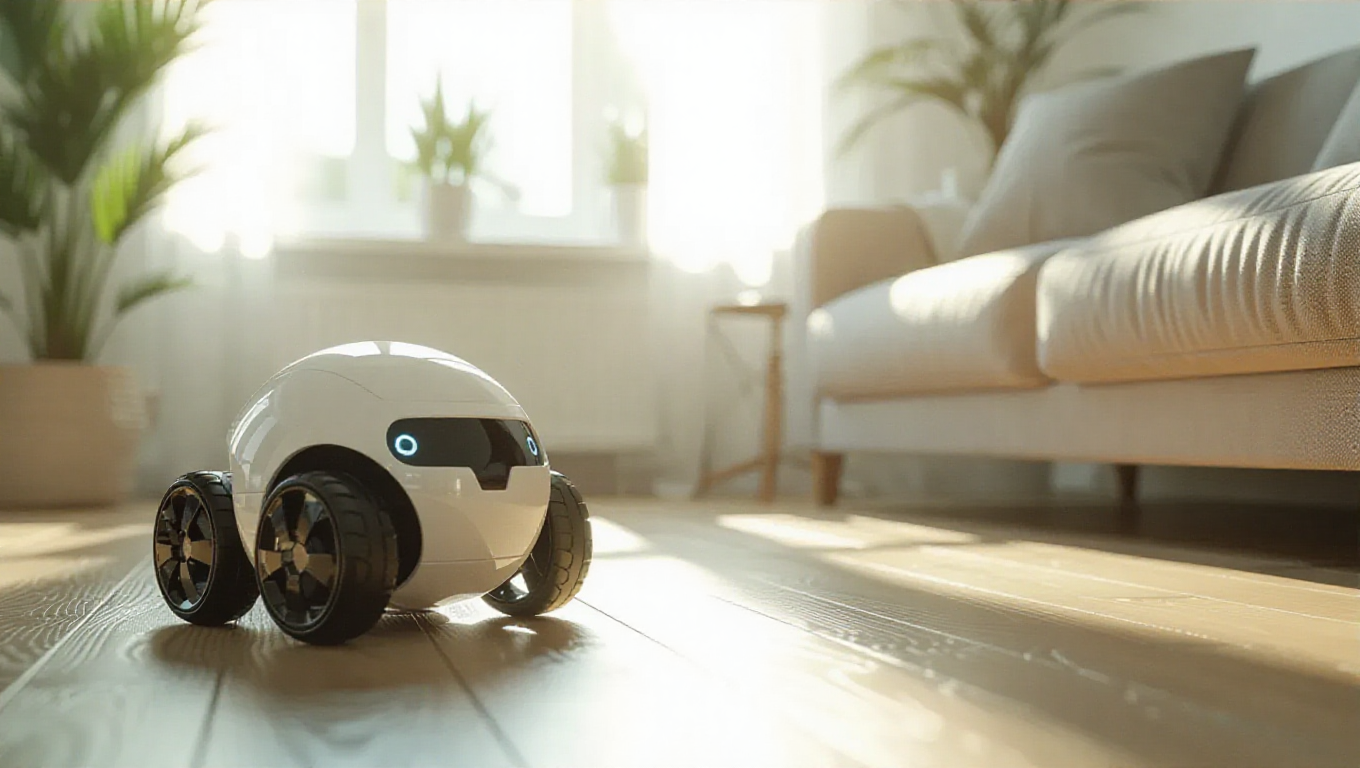
Samsung's Ballie Robot Faces Uncertain Future Amid Development Shifts
Six years after its initial unveiling, Samsung's rolling home robot Ballie appears to be heading toward cancellation rather than consumer release. The spherical AI companion, which generated significant buzz when first demonstrated, has missed multiple launch windows and now seems indefinitely shelved as Samsung reframes its purpose within the company.
From Promised Product to Innovation Platform
Ballie was first introduced as a futuristic home assistant capable of following users, controlling smart devices, projecting content, and even checking on pets. Running Tizen OS and featuring Google Gemini integration in later iterations, the robot represented Samsung's vision for ambient AI in the home. The company had promised a consumer launch by the end of 2025, but that deadline passed without release.
Recent developments suggest a significant shift in Ballie's status. When questioned about the robot's release timeframe, Samsung referred to Ballie as an "active innovation platform" rather than a consumer device intended for release. The company stated that years of real-world testing have informed how Samsung designs spatially aware, context-driven experiences in areas like smart home intelligence and privacy-by-design.
Missed Opportunities and Market Context
The robot's absence from major tech events throughout 2025 raised early concerns about its viability. Ballie was notably missing from IFA 2025, and Samsung failed to showcase it at CES 2026, where several competitors including LG demonstrated their own AI-powered home robots. These competing devices typically focus on practical chores like laundry or emotional support, suggesting a market shift toward more utilitarian applications.
Samsung's apparent hesitation may stem from uncertainty about Ballie's commercial potential. While the company has applied learnings from Ballie to other products like the Jet Bot Steam Ultra vacuum, the core robot concept appears to have been deprioritized. This comes despite Ballie's advanced capabilities, which included voice interaction, smart home control, media projection, and pet monitoring through its camera system.
Broader Implications for Consumer Robotics
Ballie's potential cancellation reflects broader challenges in the consumer robotics market. While AI and automation continue to advance, translating experimental concepts into mass-market products remains difficult. Samsung's approach—treating Ballie as a research platform rather than a failed product—suggests companies may increasingly view such projects as development tools rather than imminent releases.
The technology developed for Ballie hasn't disappeared. Samsung indicates the project continues to influence their work on ambient AI and smart home systems. This suggests that while the physical robot may not reach consumers, its underlying intelligence could appear in other forms across Samsung's product ecosystem.
Conclusion: Innovation Without Commercialization
Samsung's Ballie represents a common pattern in tech development: ambitious concepts that serve as research platforms but never reach store shelves. While disappointing for consumers who anticipated the rolling companion, Ballie's development has apparently contributed valuable insights to Samsung's AI and smart home initiatives. The robot's quiet shelving highlights the gap between demonstration prototypes and commercially viable products, even for industry giants with substantial R&D resources. As the consumer robotics market evolves, Ballie may be remembered not as a product that failed, but as an innovation platform that helped shape smarter, more responsive home technologies.