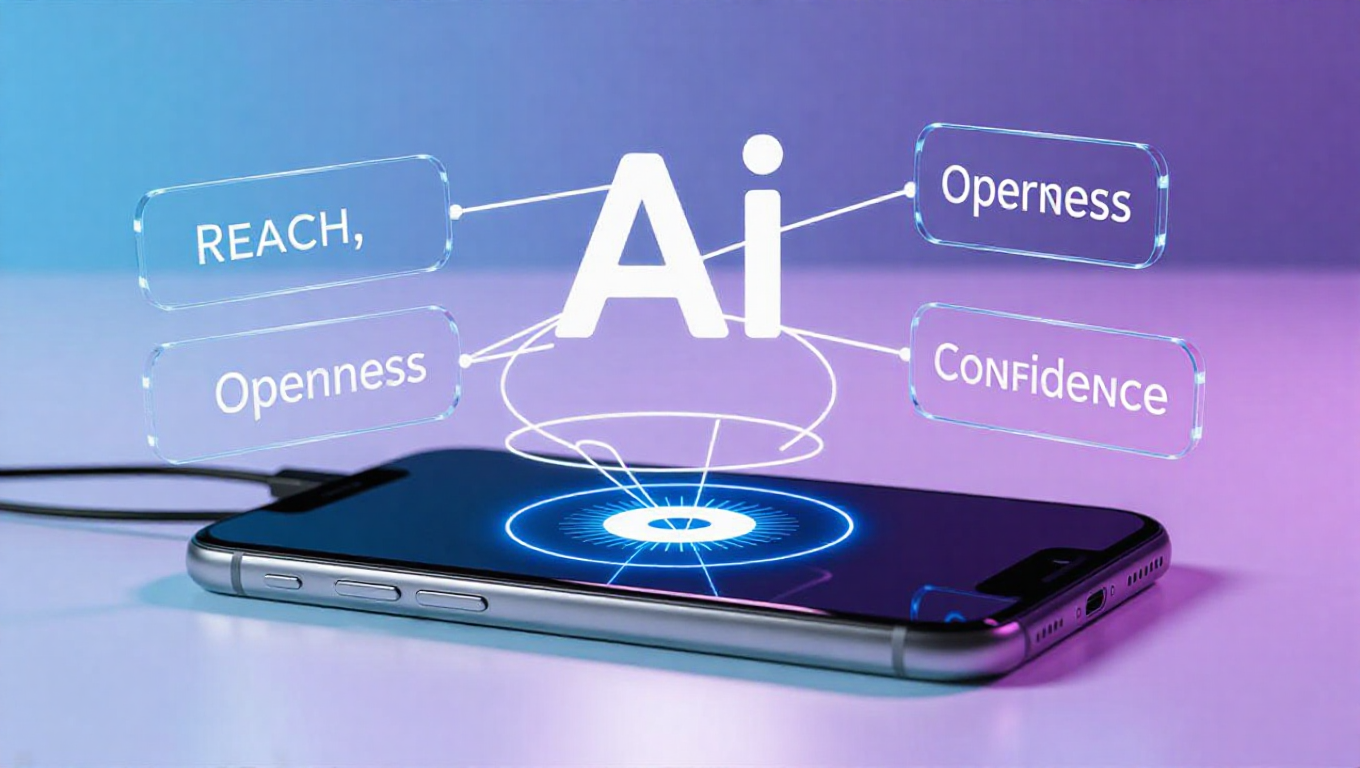
Samsung's AI Strategy: Reach, Openness, and Confidence
At a recent industry talk, Samsung's mobile leadership revealed a clear vision for artificial intelligence: to move it from a complex novelty to an effortless, trusted part of daily life. This ambition is driven by a stark reality. While a majority of mobile users recognize AI's practical value, an even larger group finds the technology too difficult to use to its full potential. To bridge this gap, Samsung is building its entire AI ecosystem around three foundational words: Reach, Openness, and Confidence.
The Three Pillars of Samsung's AI Vision
Samsung's strategy is not just about adding more features; it's about fundamentally changing the user's relationship with AI. The goal is for the technology to work seamlessly for the user, rather than requiring the user to work to understand the technology. This philosophy is embodied in three core principles.
Reach represents the scale of Samsung's ambition. The company has set a target to bring its Galaxy AI features to 800 million users before the end of 2026. This massive rollout underscores a commitment to democratizing advanced AI capabilities, making them a standard offering rather than an exclusive premium.
Openness defines the user experience. Samsung believes the true power of AI lies in its ability to assist quietly from the background. The complexities of the technology should be hidden, creating a simple and intuitive interface. This approach, moving toward more agentic AI that can anticipate and act on user needs, is central to making the technology feel open and accessible rather than intimidating.
Confidence is the critical foundation. For AI to become a daily tool, users must trust it completely, especially with their personal data. Samsung is addressing this by integrating robust security platforms like Knox Enhanced Encryption Protection and Knox Vault directly into its AI framework. The aim is to provide peace of mind, ensuring that privacy and security are not afterthoughts but built-in guarantees.
The Path to Ubiquitous AI
This three-word strategy addresses the primary barriers to AI adoption: accessibility, usability, and trust. By focusing on sheer scale (Reach), intuitive design (Openness), and ironclad security (Confidence), Samsung is crafting a holistic approach. The company's insights show that where AI is adopted, it is heavily used for practical tasks. European user data indicates popular applications include retrieving information, creating content, enhancing images and videos, and solving problems.
Samsung's vision suggests a future where AI is not a separate app or a mode you activate, but an invisible, intelligent layer integrated across the device experience. It's a shift from asking "How do I use this AI feature?" to simply accomplishing tasks with the AI's silent assistance.
Conclusion
Samsung's blueprint for ubiquitous AI is elegantly simple yet profoundly ambitious. By committing to massive user reach, championing open and simple interactions, and building an unshakeable foundation of user confidence, the company is positioning its Galaxy ecosystem at the forefront of the next phase of mobile computing. If successful, this strategy could transform AI from a promising technology into a truly indispensable and trusted companion for hundreds of millions of people worldwide.