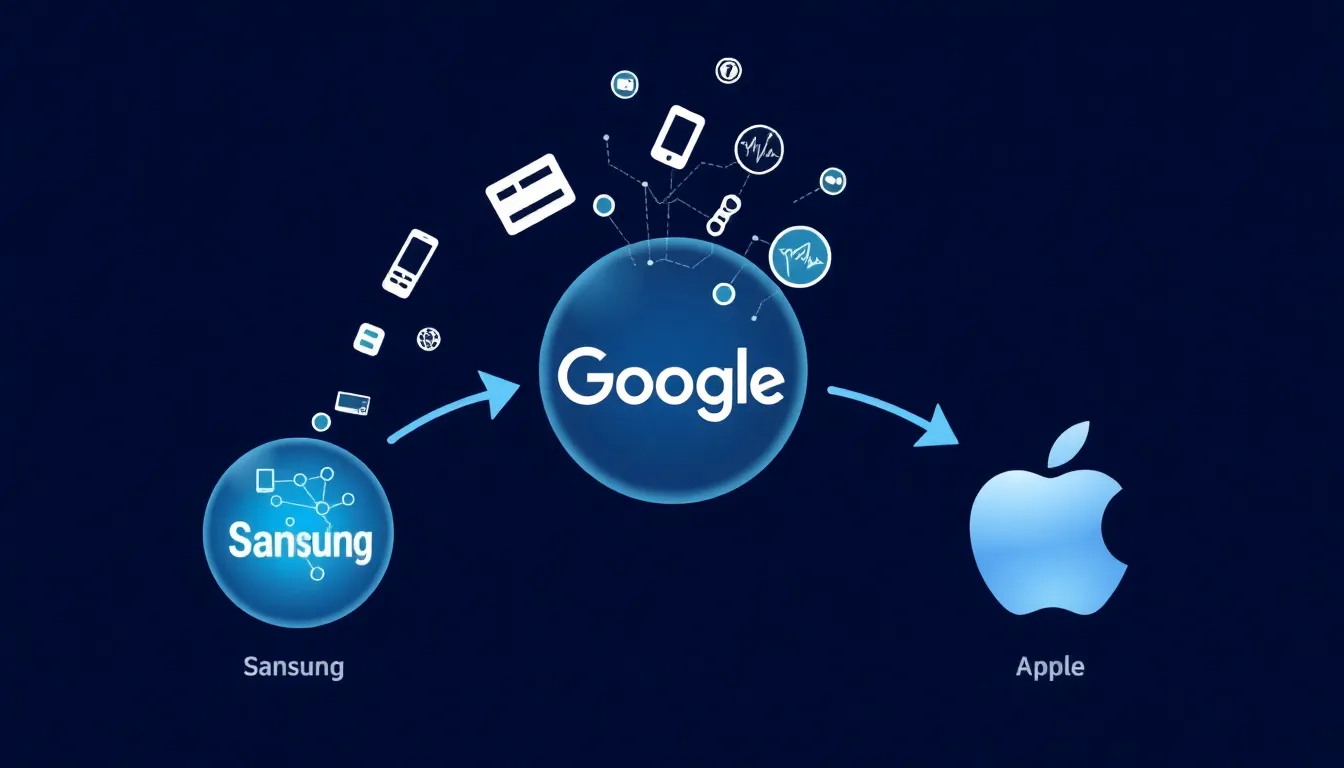
Samsung's AI Paradox: Building Google's Future While Apple Perfects the Experience
In the high-stakes race for artificial intelligence dominance, a curious dynamic has emerged. Samsung, the world's leading Android manufacturer, finds itself in a paradoxical position: its hardware scale and customer base are building the AI future that Google ultimately owns, while Apple appears poised to perfect the user experience built on that same foundation.
The Unsuccessful Walled Garden
For years, Samsung pursued software independence through initiatives like its Tizen operating system, Bixby voice assistant, and proprietary services. These efforts represented bricks in a walled garden the company hoped to build, with Bixby specifically positioned as a rival to Apple's Siri and an alternative to Google Assistant on Samsung devices. However, these ambitions have largely faltered, not necessarily due to fundamental flaws in the concepts, but because of Samsung's inescapable dependence on Google's Android ecosystem.
As an Android original equipment manufacturer, Samsung is obligated to ship Google apps and services on its devices in exchange for Android licensing. This creates a fundamental asymmetry: while Apple maintains flexibility in potential collaborations with Google, Samsung and other Android manufacturers operate within constraints that make a clean break from Google's ecosystem practically impossible.
Samsung's Scale as Google's Testing Ground
The sheer volume of Galaxy devices Samsung distributes globally—far exceeding Google's own Pixel shipments—has effectively solved Google's mobile distribution bottleneck for its Gemini AI models. When Google needed to fine-tune Gemini across diverse languages, networks, demographics, and use cases, Samsung's massive customer base provided the only viable testing ground at scale.
Every Gemini query, interaction, and user interface friction point on Samsung devices generates training data that feeds back into Google's AI systems. Samsung's customers are effectively performing the real-world testing work, with the resulting benefits flowing primarily to Google. This arrangement has transformed Samsung's Galaxy ecosystem into the world's largest and most diverse AI testing environment, yet Samsung maintains little control over Gemini's future development direction.
Apple's Strategic Implementation
While Samsung provides the training data, Apple appears positioned to perfect the user experience. After initially attempting to scale its mobile AI capabilities independently, Apple announced earlier this year that its next-generation AI models would be powered by Google's Gemini technology, which will specifically enhance the new version of Siri. This implementation reportedly includes privacy safeguards through Apple's Private Cloud Compute infrastructure.
From an implementation standpoint, Apple may emerge with the most polished user experience. Gemini branding is unlikely to feature prominently in what Apple markets as "Apple Intelligence," meaning average users will simply perceive improved AI capabilities as another Apple innovation. This creates a scenario where training data flows from Samsung devices to improve Gemini across platforms—potentially including Apple's—while similar data may not flow back from Apple's more controlled implementation.
The Ultimate Beneficiary
Google emerges as the clear beneficiary in this triangular relationship. The company maintains a dominant position in the Android ecosystem where Samsung, despite being the platform's largest vendor, lacks a robust mobile AI offering without Gemini. Meanwhile, Apple—Google's primary platform rival—has essentially acknowledged that achieving its vision of mobile AI requires Gemini's capabilities.
Samsung built the Galaxy brand through hardware excellence and relentless scale, but that scale has become a resource others can leverage. Google utilized it to distribute and refine Gemini, while Apple appears to be using it to benchmark effective mobile AI before shipping its own implementation. The walled garden Samsung once attempted to build has become someone else's orchard.
Conclusion: The current AI landscape presents Samsung with a complex reality. The company's hardware dominance and global scale have made it indispensable to Google's AI ambitions, providing the real-world data essential for training sophisticated models. Yet this very success has positioned Samsung as an executor rather than an architect of the AI future. While Apple leverages the same underlying technology to craft what may become the most seamless AI experience for consumers, Samsung finds itself exactly where it started: making the best possible version of someone else's vision. The paradox is complete—Samsung builds the foundation, Google owns the technology, and Apple perfects the experience.