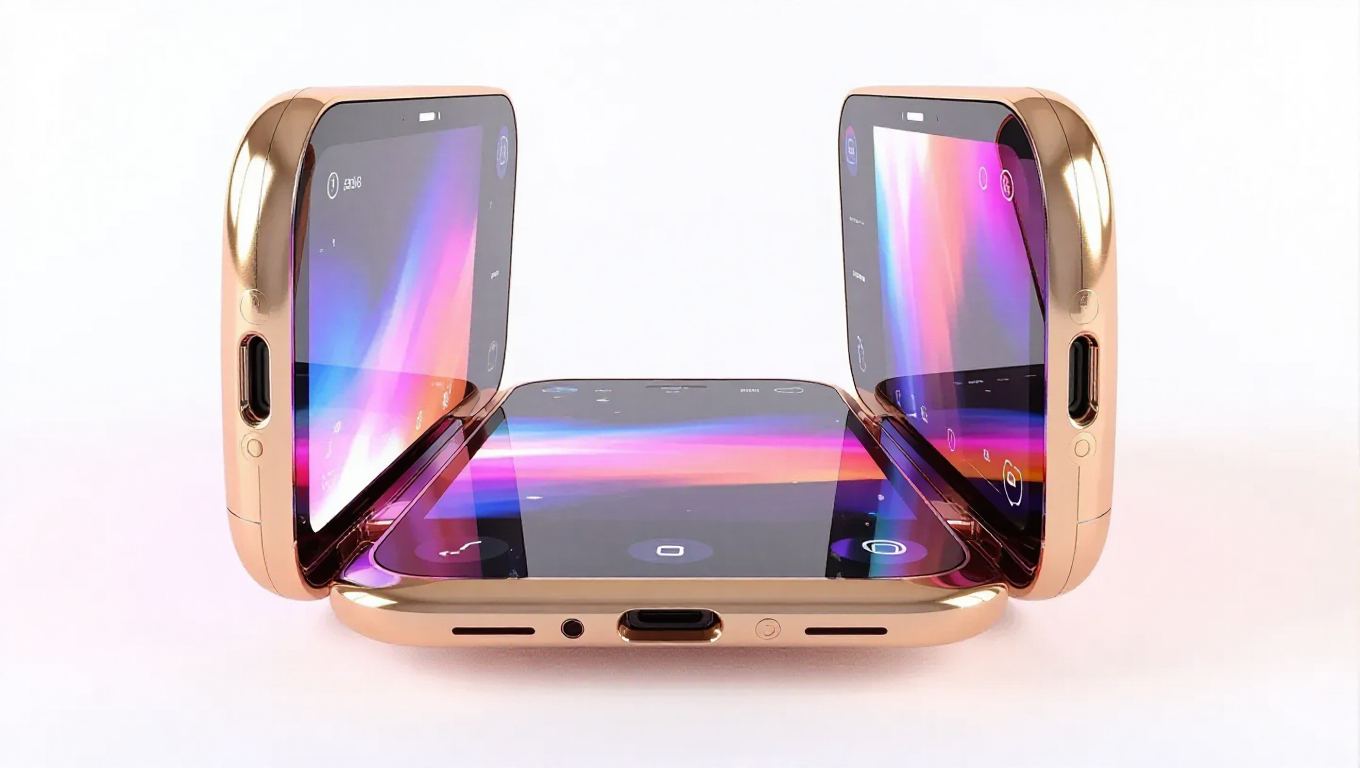
Samsung Patent Reveals Flip Phone with 360-Degree Hinge Design
A recently discovered patent from Samsung has unveiled a potentially groundbreaking approach to foldable phone design, featuring a flip-style device with a 360-degree hinge mechanism that allows for both inward and outward folding.
Revolutionary Hinge Mechanism
The patent, filed with the World Intellectual Property Organization, depicts a flip-style foldable that differs significantly from current market offerings. Unlike conventional flip phones that typically fold in one direction, this design incorporates a hinge that enables the screen to fold both inward and outward, essentially wrapping around the device's exterior.
This innovative approach eliminates the need for a dedicated cover screen, as the main display itself can be partially visible even when folded. The sketches show that when folded inward, part of the screen remains exposed on what would traditionally be the device's back, potentially allowing for limited functionality without fully opening the phone.
Design and Engineering Challenges
The patent reveals several interesting design choices. The hinge mechanism is positioned off-center, leaving the bottom portion of the device exposed when folded. This unconventional placement suggests Samsung's engineers are exploring new ways to manage the mechanical stresses of bidirectional folding while maintaining device functionality.
Images accompanying the patent show what appears to be a camera cutout on what would normally be considered the back of the device. This suggests that when the screen is folded outward, the camera might become accessible from what would typically be the front-facing position, potentially enabling new photography and video capabilities.
Technical Implications
The 360-degree hinge represents a significant engineering challenge, requiring a mechanism that can support bending in both directions without compromising screen integrity or device durability. While current foldable technology has made substantial progress in single-direction folding, bidirectional folding introduces new complexities in hinge design, screen protection, and user interface adaptation.
The patent's existence indicates Samsung continues to explore the boundaries of foldable technology, even as it refines current-generation devices. The company has demonstrated a commitment to display innovation at major trade shows, suggesting this concept might eventually appear as a prototype or influence future product designs.
Market Context and Future Possibilities
This patent emerges as Samsung continues to expand its foldable lineup, with recent leaks suggesting multiple new models in development. The 360-degree hinge concept could represent a third form factor alongside the company's existing book-style and flip-style foldables, potentially targeting users who want maximum flexibility in how they use their devices.
The design raises interesting questions about user interaction patterns. With the screen accessible in multiple configurations, software would need to intelligently adapt to different folding states, potentially enabling new multitasking capabilities or context-aware interfaces.
Conclusion
While patents don't guarantee commercial products, Samsung's 360-degree hinge design demonstrates the company's ongoing exploration of foldable technology's possibilities. This concept pushes beyond current market offerings by reimagining how screens can interact with device form factors. As foldable technology matures, such innovative approaches could eventually translate into products that offer users unprecedented flexibility in how they interact with their mobile devices. The industry will be watching to see if this patent evolves from concept to prototype and ultimately to consumer product, potentially setting new standards for mobile device design.