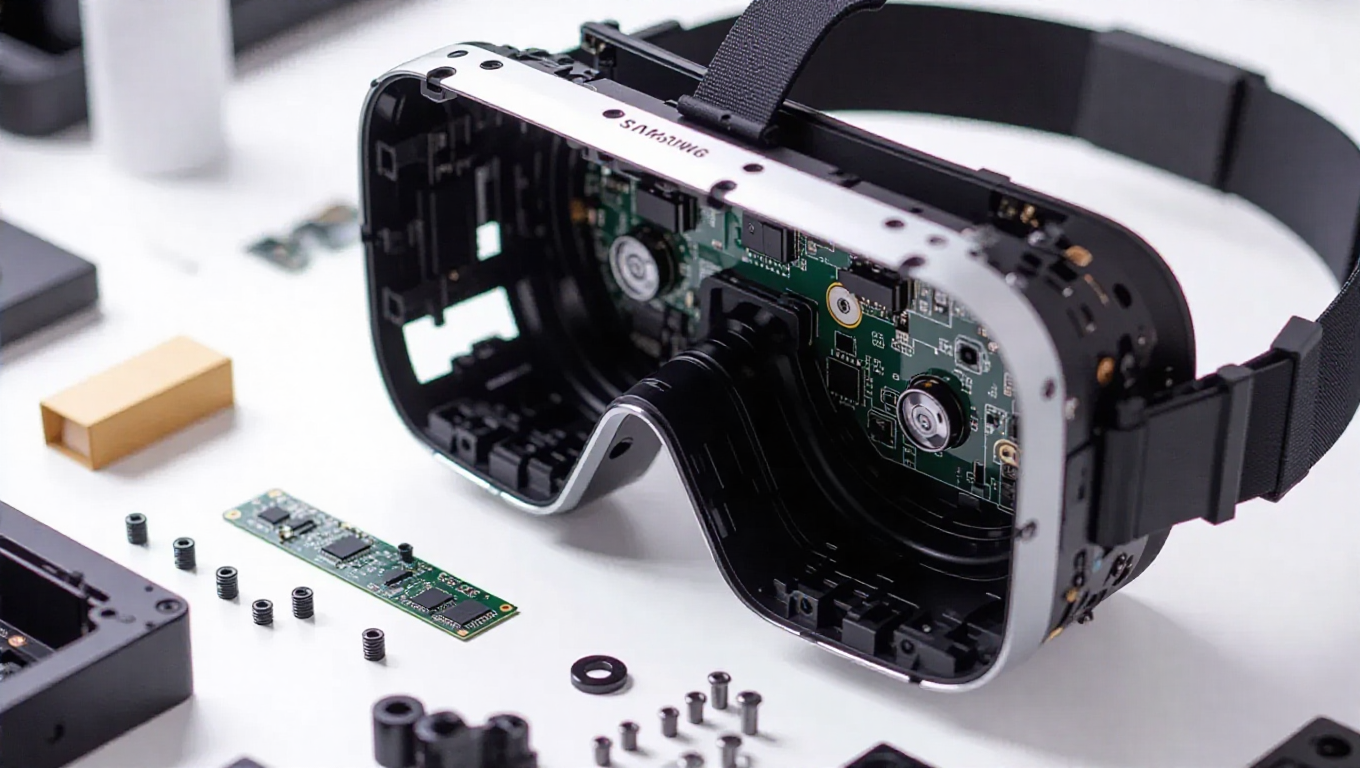
Samsung Galaxy XR Teardown Exposes Innovative Yet Flawed Construction
A recent disassembly of the Samsung Galaxy XR mixed-reality headset has uncovered a construction that balances clever engineering with notable repairability challenges, offering a mixed bag for tech enthusiasts and potential owners.
Design and Entry Points
The Galaxy XR, launched in October 2025, features a lightweight build compared to competitors like Apple's Vision Pro. Its design includes magnetic face cushions and light seals for user comfort. To access the internals, the teardown reveals that entry begins from the front, requiring removal of a plastic shell. This initial step is reportedly challenging, making the disassembly process difficult for average users.
Internal Layout and Components
Inside, the headset showcases a streamlined construction with components arranged on a single layer, simplifying the internal architecture. The use of standard Phillips screws throughout means no specialized tools are needed for most repairs, a positive aspect for DIY enthusiasts. Notably, the mainboard is designed for relatively easy replacement, and the battery is external, allowing for straightforward swaps without delving deep into the device—a significant advantage for longevity and user maintenance.
Repairability Concerns
Despite these strengths, the teardown highlights several drawbacks. A "Void if tampered" sticker is found inside, which is noted as illegal in the United States, raising legal and ethical questions about consumer rights. This sticker, combined with the difficult entry process, suggests a consumer-unfriendly approach to repairs. Additionally, there are no published repair manuals from Samsung, further complicating efforts for third-party or user-led fixes.
Overall Assessment
The Galaxy XR emerges as a device with contradictions: its modular design and tool-free screws enhance repairability in some areas, but the anti-tampering measures and lack of support materials hinder it. This teardown provides valuable insights for those considering the headset, emphasizing the importance of balancing innovation with user accessibility.
In summary, the Samsung Galaxy XR's construction reveals a thoughtful yet imperfect approach to mixed-reality hardware. While its lightweight build and external battery offer practical benefits, the repairability issues and controversial stickers may deter some users. As the XR market evolves, this teardown underscores the need for manufacturers to prioritize both performance and repairability in future designs.