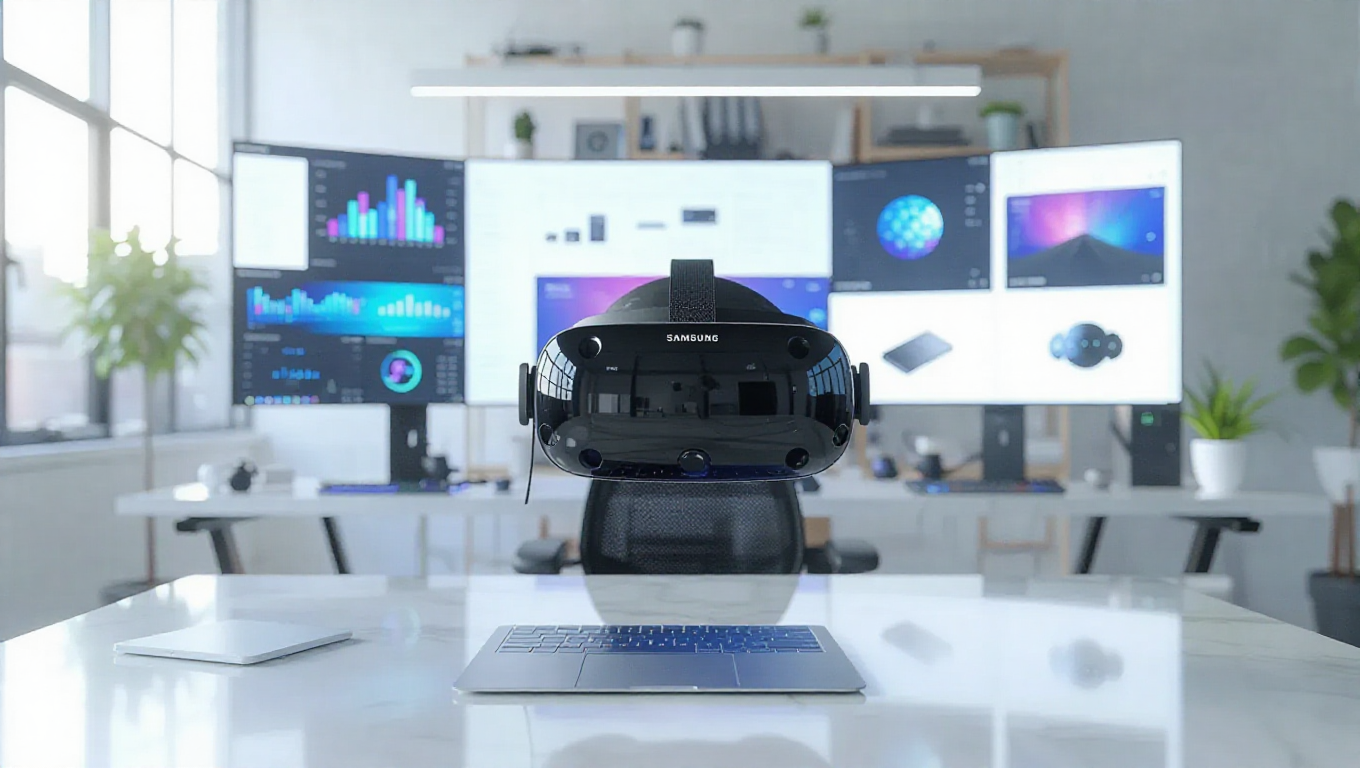
Samsung Galaxy XR: A Practical but Niche First-Gen Mixed Reality Headset
Samsung's entry into the mixed reality space, the Galaxy XR, presents a compelling glimpse into the future of spatial computing. Priced at $1,799, this first-generation headset prioritizes display quality and software usability, positioning itself as a more accessible premium alternative in a nascent market. While it demonstrates strong foundations, its current value proposition appears strongest for business and professional applications rather than everyday consumer use.
Design and Comfort: Prioritizing Long-Term Wearability
The Galaxy XR's design philosophy diverges from luxury material focus, instead emphasizing ergonomic balance for extended sessions. The headset distributes weight evenly across the head, avoiding excessive pressure on the cheeks—a critical consideration for workflows involving movies or hour-long work periods. This approach makes sustained use more feasible than many front-heavy alternatives.
However, the rear adjustment mechanism presents a notable flaw. While comfortable during upright use, leaning back or resting the head causes pinpoint pressure from the adjustment ring, creating discomfort. A side-mounted design would likely improve this aspect. The external battery pack, while adding friction with its cable and separate charging needs, serves a functional purpose by keeping weight off the front, reducing neck strain—a trade-off inherent to current high-performance XR hardware.
Display and Visual Experience: Where Premium Status Is Earned
The Galaxy XR's microOLED panels deliver exceptional sharpness, making virtual screens genuinely usable for productivity tasks. Text clarity reaches a level where pixel structure becomes unnoticeable, enabling comfortable reading, writing, and browsing. Pancake lenses enhance this by providing consistent sharpness across the viewing area, allowing natural eye movement rather than constant head turning when multitasking across spatial windows.
Mixed reality passthrough performs reliably in well-lit environments, supporting the headset's practical orientation. The visual fidelity fundamentally supports the device's ambition to move beyond gaming into professional and productivity realms.
Software and Practicality: A More Grounded Platform Approach
The Galaxy XR's software environment offers a more immediately practical experience than some competitors, with robust app compatibility and integration of commonly used services. This reduces the platform friction often encountered with early-generation XR devices. The interface supports spatial multitasking effectively, leveraging the high-quality display to make virtual screen arrangements genuinely functional.
Market Position and Future Outlook
At its current price point, the Galaxy XR occupies a specific premium niche rather than competing with mainstream VR headsets. Its controlled rollout strategy reflects the careful platform development typical of first-generation hardware in this category. While the foundation is strong—with excellent displays, thoughtful ergonomics, and practical software—the compelling use cases for most consumers remain limited. Those not already invested in spatial computing workflows may struggle to justify the investment.
The Galaxy XR ultimately serves as both a capable tool for specific professional applications and a promising indicator of where mixed reality technology is headed. For early adopters in business and specialized fields, it offers tangible value today. For the broader market, it represents an impressive but still-evolving step toward more accessible spatial computing.