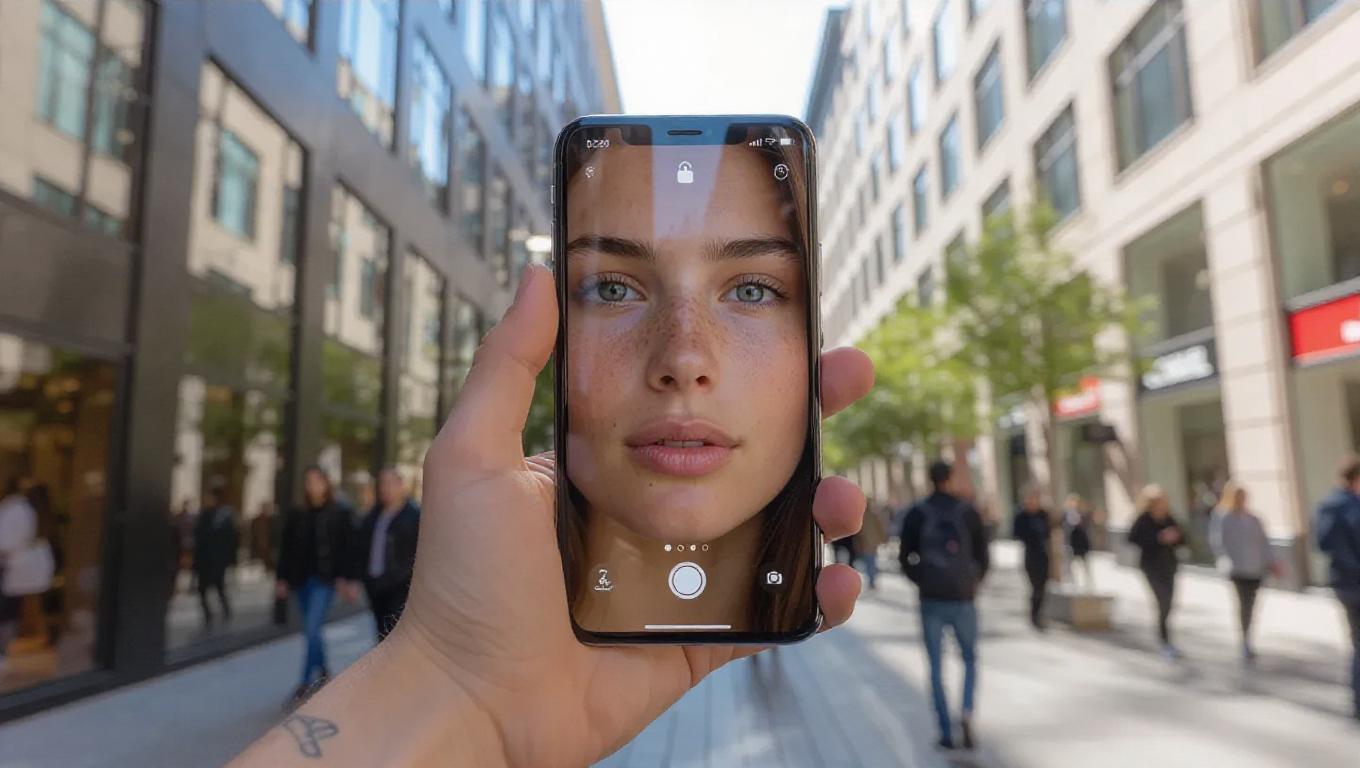
Samsung Galaxy S26 Selfie Camera: AI Enhancements Define the Experience
With the launch of the Galaxy S26 series, Samsung has shifted focus from hardware upgrades to AI-driven software improvements for the selfie camera, promising more natural results across all models.
AI ISP Integration Extends to Front-Facing Camera
The key advancement in the Galaxy S26's selfie capabilities lies in the integration of an AI Image Signal Processor (ISP). This technology, which became prominent in mobile photography in 2024, is now applied to the front camera across the entire S26 lineup. The AI ISP enables more accurate skin tone reproduction and preserves finer facial details, even in challenging lighting scenarios such as mixed or low light.
Details on the specific AI algorithms remain limited, but the implementation suggests a focus on real-time processing to enhance image quality without relying solely on hardware changes.
Consistent Experience Across Chipset Variants
A significant aspect of the S26's selfie improvement is its consistency. The series uses different chipsets depending on the region: the Snapdragon 8 Elite Gen 5 in some markets and the Exynos 2600 in others, particularly for the base S26 and S26+ models. However, both chipsets include an AI ISP, ensuring that the selfie camera benefits from AI processing regardless of the variant. This uniformity means users can expect similar selfie performance whether they have a Snapdragon or Exynos model.
This approach marks a departure from past disparities, where chipset differences could lead to varying camera experiences.
Hardware Stays Largely Unchanged
Despite the software upgrades, the selfie camera hardware on the Galaxy S26 series remains similar to its predecessor. All models—the S26, S26+, and S26 Ultra—feature a 12MP front-facing shooter with an f/2.2 aperture and 1.12-micron pixels, mirroring the specs from the 2025 lineup. This indicates that Samsung is prioritizing AI enhancements over hardware iterations for selfie improvements this cycle.
The reliance on AI suggests that computational photography is becoming the primary driver for camera advancements, even in the selfie segment.
Potential Impact on User Experience
The AI-driven improvements are expected to result in selfies with more natural-looking skin tones and enhanced detail retention, particularly in non-ideal lighting. Users might notice better performance in environments like indoor settings or backlit scenes, where previous models could struggle with over-processing or loss of detail.
While hands-on testing would provide definitive conclusions, the technical specifications point to a refined selfie experience that leverages AI to maximize the existing hardware's potential.
Conclusion
The Galaxy S26 series represents a strategic pivot in Samsung's approach to selfie cameras, emphasizing AI enhancements over hardware upgrades. By extending AI ISP processing to the front camera across all chipset variants, Samsung ensures a consistent and improved experience focused on natural skin tones and detail preservation. While the hardware remains unchanged from last year, the software advancements could make the S26 a notable step forward for selfie enthusiasts, highlighting the growing role of AI in mobile photography.