Kami: The Origami Simulator Pushing Foldable Phone Limits
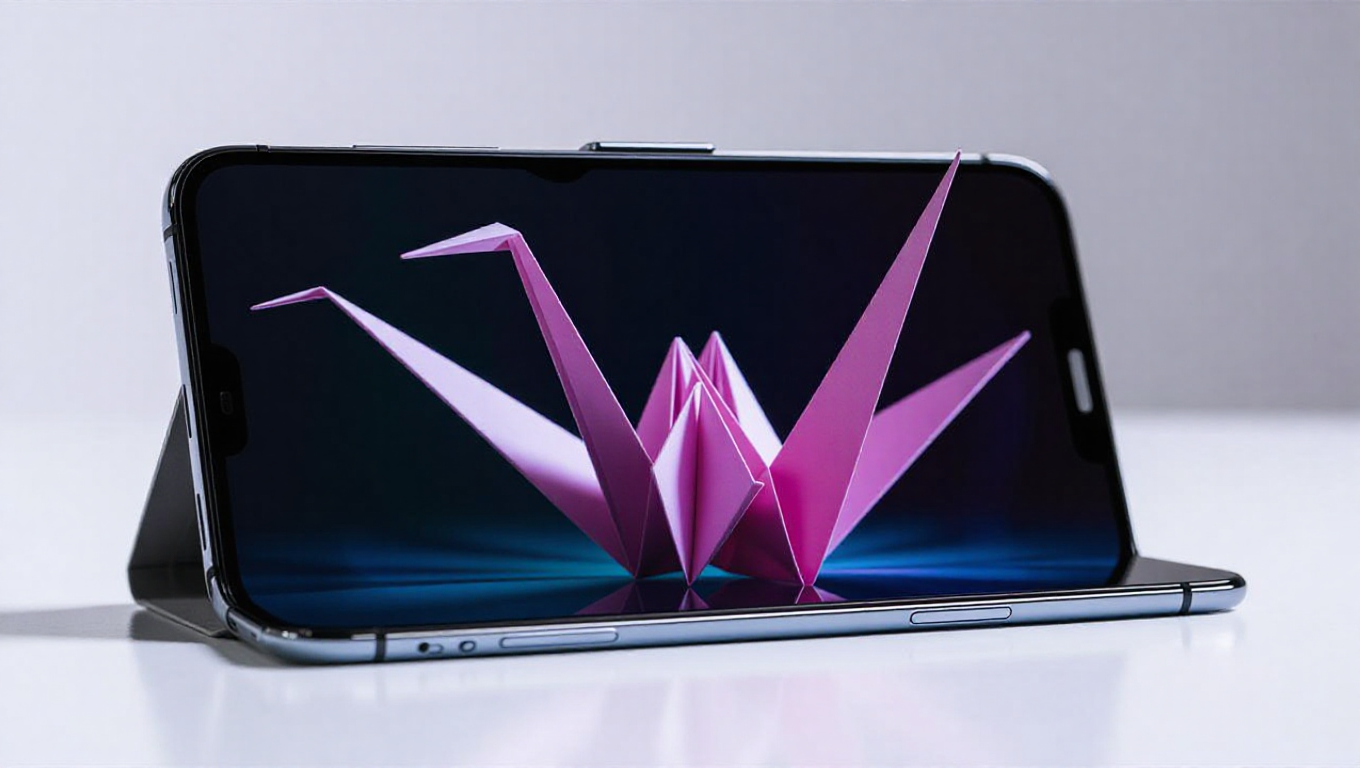
A new open-source origami simulator called "Kami" has emerged, joining a growing category of applications specifically designed to test the physical boundaries of foldable smartphones. The game operates on a straightforward premise: it transforms the device's flexible display into a virtual sheet of paper that users can fold, crease, and manipulate with realistic physics.
A New Category of Stress-Testing Software
Kami represents a deliberate step into what some observers are calling a niche genre of software aimed at foldable hardware. Unlike traditional games optimized for performance or graphics, applications like Kami focus on simulating mechanical actions that directly engage the phone's hinge and flexible screen. The core interaction involves making precise folds on the digital paper, with the software providing haptic and visual feedback meant to mimic the resistance and texture of real origami.
This design philosophy intentionally leverages the unique form factor of foldable devices. Where a standard smartphone presents a static, flat surface, foldables offer a dynamic canvas that can be bent. Kami utilizes this capability not just as a display feature, but as the central mechanic of the experience. Every fold performed in the game corresponds to a physical action on the device itself.
Durability Questions and User Reception
The emergence of such software inevitably sparks discussion about long-term device durability. While modern foldables are engineered to withstand tens of thousands of folds in standard use, applications that encourage rapid, repetitive, or forceful folding motions could theoretically accelerate wear. Initial impressions of Kami note its unapologetic approach to this concept, presenting itself less as a casual pastime and more as a deliberate stress test wrapped in a creative simulator.
User reactions appear mixed, split between fascination with the novel tactile experience and concern over potential hardware implications. Some praise the app for its innovative use of the foldable form factor, celebrating it as one of the first pieces of software that feels truly native to the hardware rather than a ported experience. Others question the wisdom of regularly using an app that so directly and intensely utilizes the device's most delicate mechanical component.
The Broader Trend and Future Implications
Kami is not an isolated phenomenon. It is part of a small but noticeable trend where developers are creating software explicitly to explore—and sometimes challenge—the physical limits of new device categories. This trend raises important questions for both manufacturers and consumers. For manufacturers, it presents a real-world, user-driven durability test that goes beyond laboratory simulations. For consumers, it highlights a need to understand the intended use case of their devices versus the experimental possibilities unlocked by creative developers.
The existence of Kami and similar apps suggests a future where software and hardware are more intimately linked in terms of physical interaction. It challenges the notion of devices as immutable tools, instead presenting them as dynamic interfaces whose form can be an integral part of the software experience.
Conclusion: Innovation Versus Preservation
Kami stands at the intersection of software innovation and hardware preservation. It is a compelling demonstration of how foldable technology can enable entirely new genres of interaction, moving beyond simply offering a larger screen to providing a manipulable one. However, its very premise serves as a reminder that pioneering hardware often walks a fine line between enabling new experiences and risking premature wear.
For adventurous users, it represents the cutting edge of foldable app design. For the cautious, it may serve as a cautionary example. Ultimately, Kami underscores a fundamental tension in the tech industry: the drive to fully utilize new capabilities versus the imperative to ensure product longevity. As foldable technology matures, the dialogue between apps like Kami and the devices they run on will likely shape the evolution of both.