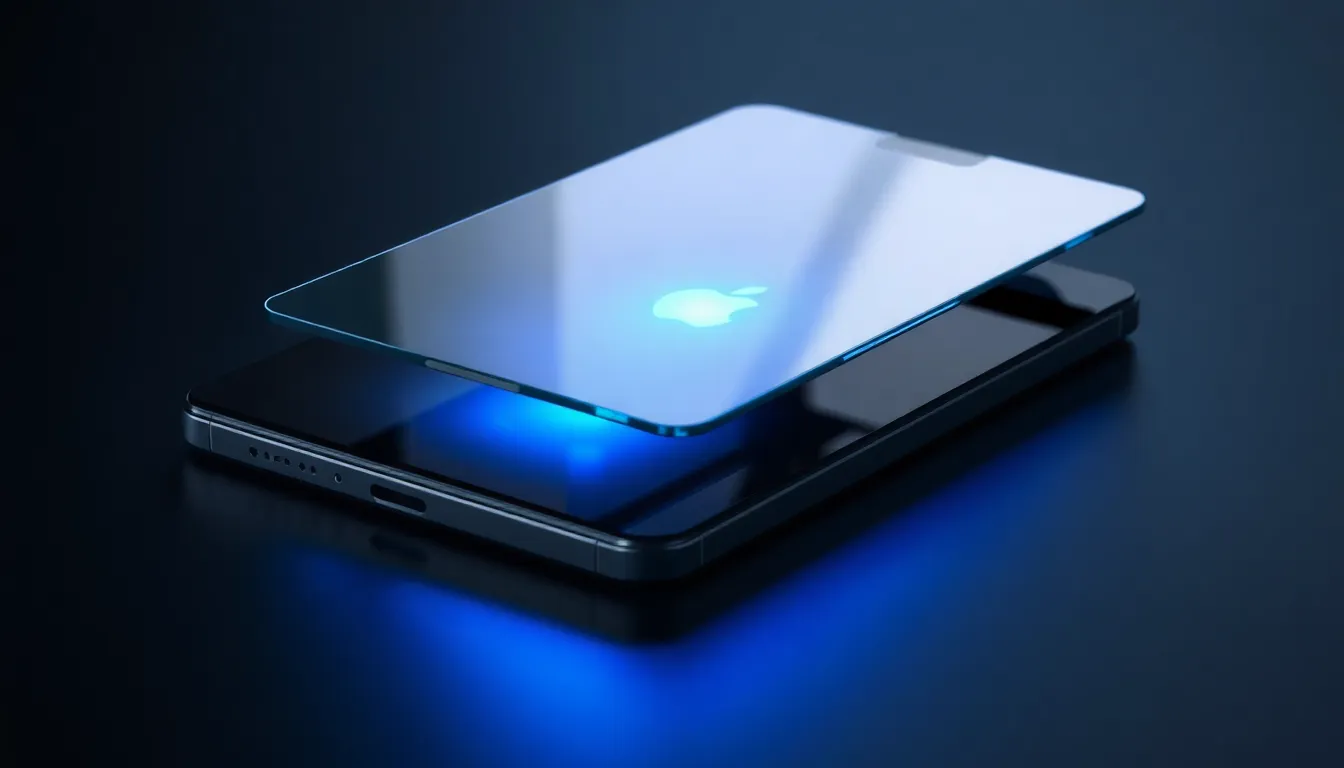
iPhone Fold Rumored to Feature Dual-Layer Glass for Minimal Display Crease
Apple's long-anticipated entry into the foldable smartphone market may feature innovative display technology designed to address one of the most persistent challenges in foldable devices: the visible crease. Recent leaks suggest the iPhone Fold could utilize a dual-layer glass approach to create a nearly seamless viewing experience.
Technical Approach to Crease Reduction
The rumored design involves positioning the flexible display between two layers of ultra-thin glass (UTG) or ultra-foldable glass (UFG). This configuration reportedly prevents the display from making direct contact with the hinge mechanism, which could significantly reduce stress points and visible creasing over time. The approach appears designed to balance flexibility with structural integrity, potentially offering improved durability compared to single-layer solutions.
Additional features mentioned in leaks include self-healing glass technology and a seamless hinge design. The self-healing properties could address minor scratches and imperfections that commonly affect foldable displays, while the hinge design might contribute to the overall crease reduction strategy. The display is said to target a remarkably small 0.15mm crease, which would represent a significant improvement over many current foldable devices.
Display Specifications and Market Context
The iPhone Fold is rumored to feature a 7.8-inch inner display with a wider aspect ratio than some competing foldables, potentially offering a more tablet-like experience when unfolded. The cover display is said to measure 5.49 inches, providing standard smartphone functionality when closed. The display technology appears similar to approaches used by other manufacturers who have focused on crease reduction, though Apple's implementation may involve unique engineering solutions.
Industry observers note that crease visibility has been a persistent challenge for foldable displays, with various manufacturers employing different strategies to minimize its appearance. Some approaches focus on hinge engineering, others on display materials, while several combine multiple techniques. The dual-layer glass approach represents one potential solution that could offer both optical improvements and enhanced durability.
Expected Launch and Pricing
The device is expected to launch in September with a starting price around $1,999 in the United States. This pricing would position the iPhone Fold as a premium offering in the foldable market, competing with high-end devices from established manufacturers. The combination of Apple's ecosystem integration with innovative foldable technology could make this one of the most significant product launches in the smartphone industry this year.
As with all pre-launch information, these details remain unconfirmed by Apple. The company typically maintains secrecy around unreleased products, with official specifications only revealed at launch events. However, the consistency of leaks from multiple sources suggests significant development progress on Apple's foldable ambitions.
Conclusion
The potential use of dual-layer glass technology in the iPhone Fold represents an interesting approach to solving the crease problem that has challenged foldable displays since their introduction. If the rumors prove accurate, Apple may have developed a solution that balances display quality, durability, and user experience in a way that could advance the entire foldable category. As the anticipated September launch approaches, more details will likely emerge about how Apple plans to differentiate its first foldable device in a competitive market.