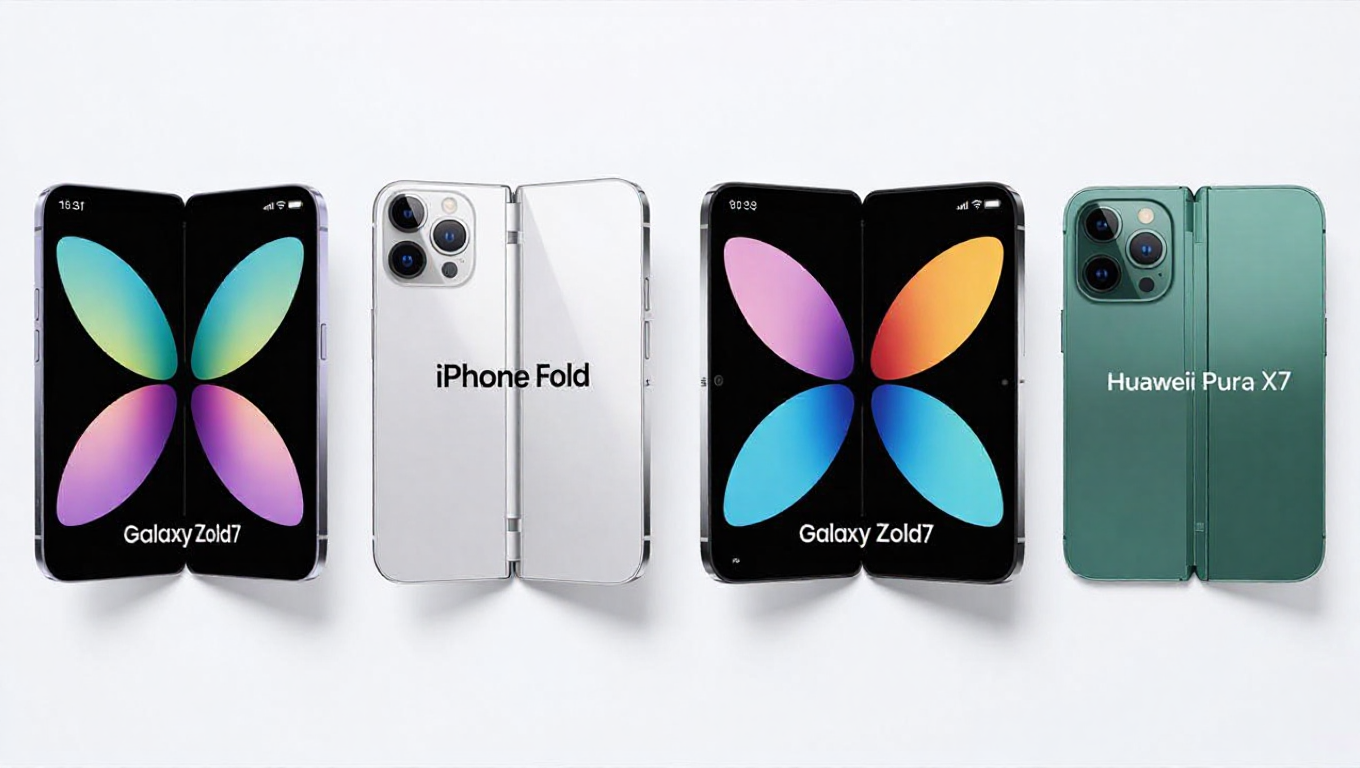
iPhone Fold Mockup Compared to Galaxy Z Fold7, Z TriFold, and Huawei Pura X
As anticipation builds for Apple's potential entry into the foldable smartphone market, a new visual comparison places a mockup of the rumored iPhone Fold alongside current and upcoming competitors from Samsung and Huawei. This side-by-side look offers a glimpse at how Apple's design philosophy might translate to a foldable form factor and how it would differentiate itself in an increasingly crowded space.
A Unique Form Factor Emerges
The most striking aspect of the iPhone Fold mockup is its form factor. Unlike many existing book-style foldables that unfold into a more square-shaped display, the iPhone Fold appears designed to be significantly wider when folded. This design choice results in a device that unfolds directly into a landscape-oriented, rectangular screen. This aspect ratio is more akin to a traditional tablet or laptop screen, potentially offering a better experience for media consumption and multitasking in a single, unfolded state compared to the taller, narrower layouts of some rivals.
Side-by-Side with the Competition
When placed next to Samsung's expected Galaxy Z Fold7, the differences are immediately apparent. The iPhone Fold mockup appears smaller in overall unfolded size but presents a much wider and less square display profile. This contrast highlights a fundamental design divergence: one optimized for portrait-style use when folded, the other seemingly built for landscape immersion when open.
The comparison becomes even more interesting with Samsung's rumored Galaxy Z TriFold. This device, which folds twice to transform into a larger tablet-like screen, represents a different approach to maximizing screen real estate. While both the TriFold and the iPhone Fold aim for a expansive view, the paths to get there—a double fold versus a single, wide fold—are distinct.
Finally, the mockup is shown alongside Huawei's Pura X, a flip-style foldable noted for its extra-wide aspect ratio. While the Pura X folds in a clamshell style vertically, and the iPhone Fold would fold like a book horizontally, the visual comparison reveals a slight resemblance in the pursuit of a wider display format, albeit through completely different mechanical implementations.
Implications for the Foldable Market
These images underscore the potential uniqueness of the iPhone Fold's design. Its wide, landscape-focused form factor is not currently mirrored by any major mass-market foldable. This distinct approach could be Apple's key differentiator, appealing to users who prioritize a seamless tablet-like experience for videos, documents, and creative apps over the pocket-friendly, phone-to-mini-tablet transition offered by many existing models.
However, this uniqueness may be short-lived. The industry is highly reactive, and should Apple's design prove popular, it is almost certain to inspire similar wide-format foldables from other manufacturers. The foldable market is still defining its ideal forms, and Apple's entry, if it materializes as depicted, would introduce a compelling new template for the category.
Conclusion
This visual comparison, while based on a mockup and rumors, effectively illustrates the potential design battleground in the high-end foldable segment. The iPhone Fold mockup suggests a device that carves its own niche with a wide, landscape-oriented screen, standing apart from Samsung's refined book-style and ambitious tri-fold designs, as well as Huawei's unique flip-style approach. If these designs come to fruition, consumers will be presented with a richer variety of foldable forms than ever before, each catering to different preferences for how a smartphone should expand and transform.