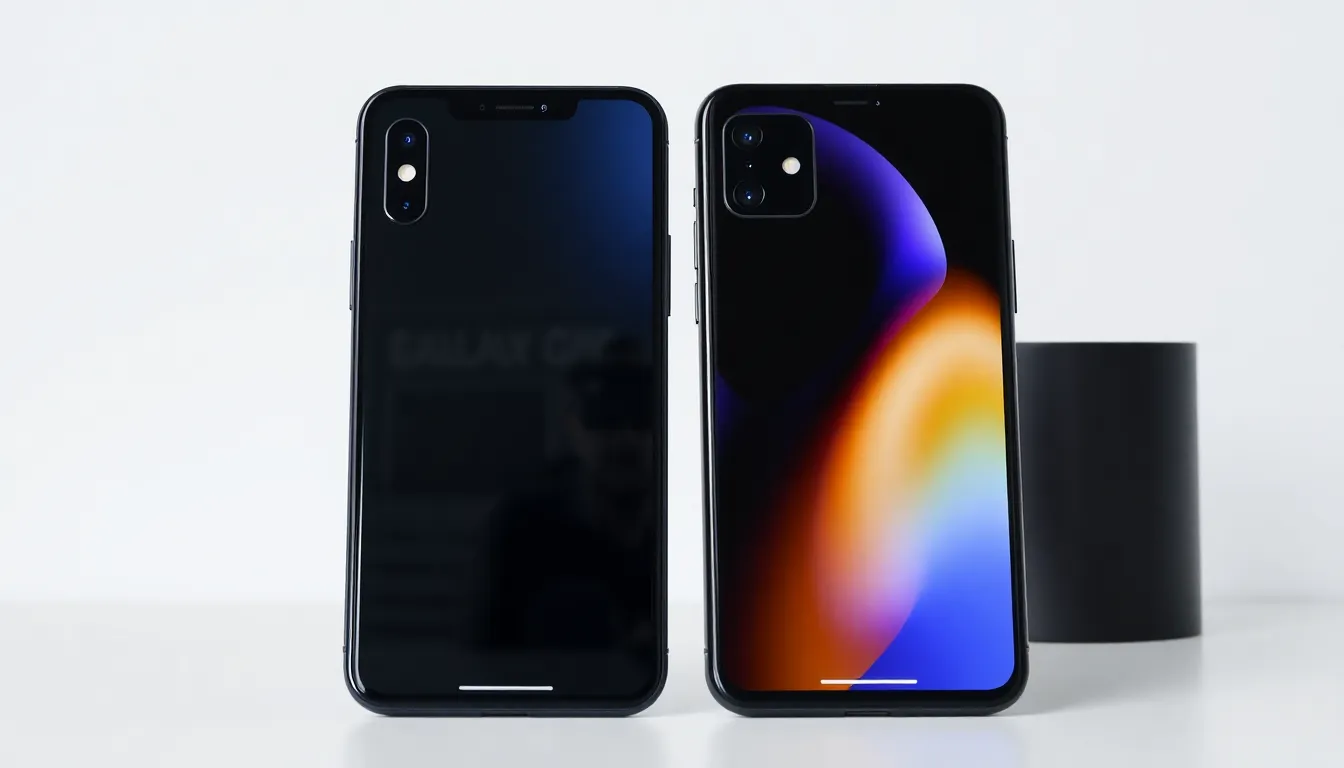
iPhone 17 vs Galaxy S26: Key Features Where Apple Leads
In the competitive smartphone market, the latest flagship releases from Apple and Samsung offer distinct approaches to premium features. While the Galaxy S26 series brings meaningful upgrades to its Ultra model, the base Galaxy S26 appears to trail the iPhone 17 in several key hardware areas, making Apple's offering potentially better value for consumers.
Display and Visual Experience
The iPhone 17 features a 6.3-inch OLED display with Full HD+ resolution and a 1-120Hz variable refresh rate. Where it significantly outshines the Galaxy S26 is in peak brightness—reaching up to 3,000 nits compared to 2,600 nits—and the inclusion of an anti-reflective coating that the Samsung device lacks. Additionally, the iPhone supports Dolby Vision HDR through its 10-bit panel, providing enhanced color depth and dynamic range for compatible content.
Camera Capabilities
Apple has equipped the iPhone 17 with an 18MP square-format front-facing camera featuring autofocus, allowing users to capture both portrait and landscape images without physically rotating the phone. This contrasts with the Galaxy S26's 12MP rectangular sensor front camera. For ultrawide photography, the iPhone's 48MP sensor with autofocus offers greater detail and focus adjustment compared to the Galaxy's 12MP fixed-focus ultrawide camera, though both support 4K 60fps HDR video recording.
Charging and Battery Technology
Despite having a smaller estimated 3,700mAh battery compared to the Galaxy S26's 4,300mAh, the iPhone 17 supports faster charging speeds. Wired charging reaches up to 40W, achieving 50% charge in approximately 20 minutes, while wireless charging supports up to 25W. Remarkably, the iPhone's wireless charging matches the Galaxy's wired charging speed. Real-world battery life remains competitive between the two devices despite the capacity difference.
Durability and Connectivity
Both smartphones carry IP68 ratings for dust and water resistance, but the iPhone 17 is rated for submersion up to 6 meters for 30 minutes, significantly deeper than the Galaxy S26's 1.5-meter rating. In connectivity, the iPhone features newer Bluetooth 6.0 technology compared to the Galaxy's Bluetooth 5.4, plus Ultra Wideband (UWB) support for precise location tracking and enhanced smart lock functionality. The Galaxy S26 does counter with a faster USB 3.2 Gen 1 Type-C port supporting Samsung DeX, versus the iPhone's USB 2.0 port.
Conclusion
The iPhone 17 demonstrates clear advantages over the base Galaxy S26 in display technology, camera hardware, charging speeds, water resistance, and wireless connectivity. These differences become particularly notable given the iPhone's lower pricing for equivalent storage configurations. While the Galaxy S26 maintains strengths in battery capacity and USB connectivity, Apple's latest offering presents a compelling package that may influence consumer decisions in the premium smartphone segment.