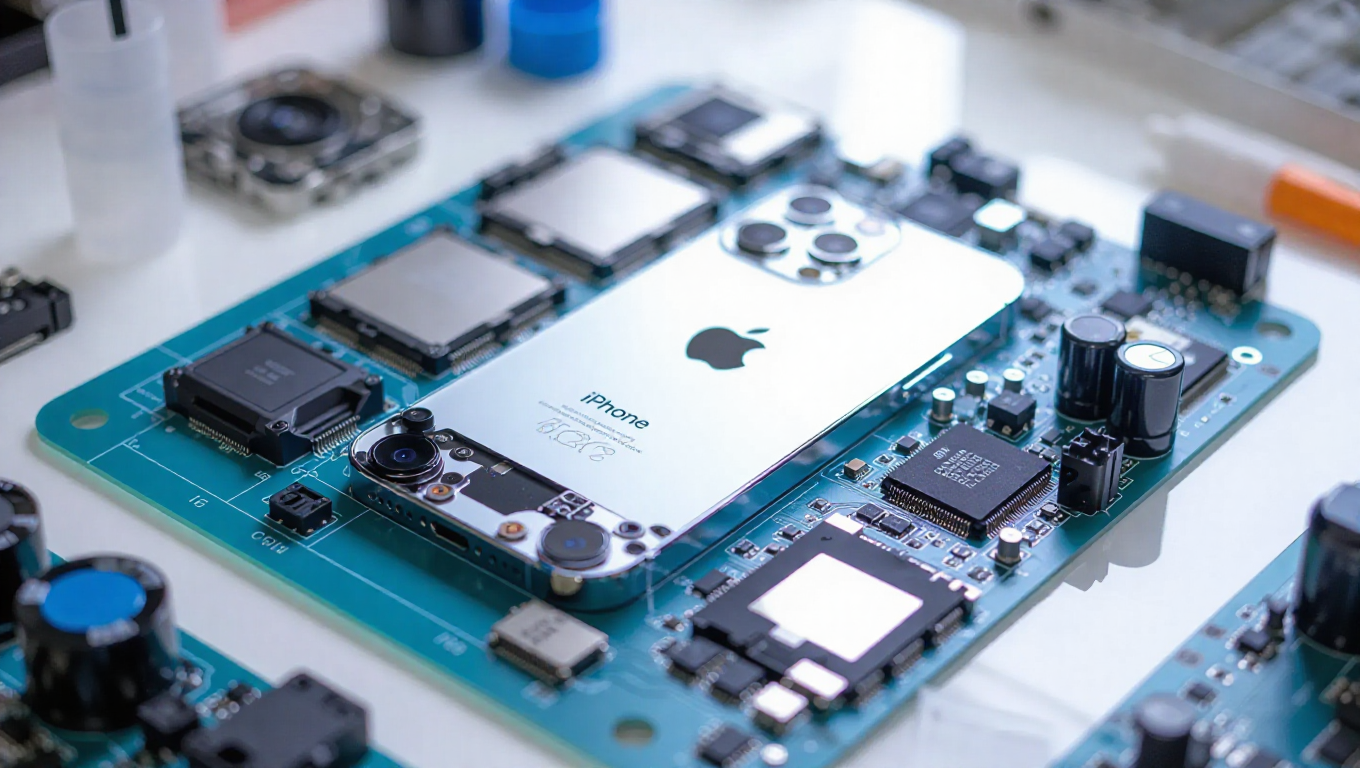
iPhone 17 Teardown Reveals Familiar Design Process and Premium Component Pricing
The latest teardown analysis of Apple's standard iPhone 17 model provides valuable insights into the company's manufacturing consistency and the financial implications for device repairs. While the internal design follows established patterns seen in previous iPhone generations, the cost of replacement components continues to represent a significant investment for consumers.
Accessible Internal Design
Gaining entry to the iPhone 17 follows Apple's established procedure, beginning with the removal of two pentalobe screws located at the bottom of the device. These specialized screws, which Apple sells for just $0.18 each, provide the initial access point. For battery replacement procedures, the next step involves heating the back glass panel, which allows the phone to open smoothly like a book. Additional screw removal completely separates the back panel from the main chassis, revealing the internal components.
Premium Replacement Costs
The teardown highlights the substantial costs associated with iPhone 17 repairs through official channels. Screen replacement represents the most expensive single component at $329, while back glass panel replacement costs $159. Battery replacement carries a $99 price tag, though this reduces to $51 if the original battery is returned to Apple through their recycling program.
Camera system replacements also command premium pricing, with the dual rear camera assembly costing $169 and the front-facing camera with Face ID sensors priced at $199. Other notable component costs include $67 for the earpiece and 5G mmWave antenna combination, and $67.08 for the Taptic Engine vibration motor.
Design Consistency Across Models
The iPhone 17's internal layout maintains Apple's signature design philosophy, with components arranged for optimal space utilization and thermal management. This consistency across the iPhone lineup allows for similar repair procedures between standard and Pro models, though component specifications and pricing may vary. The modular approach to certain components facilitates targeted repairs rather than requiring complete device replacement for minor issues.
Repair Economics and Consumer Impact
The pricing structure for replacement parts reflects Apple's position on device longevity and repair accessibility. While the company has made strides in self-repair programs and component availability, the costs remain substantial compared to third-party alternatives. This pricing strategy affects consumer decisions regarding device maintenance, insurance coverage, and upgrade cycles.
The battery replacement program, which offers significant savings when returning the original component, demonstrates Apple's commitment to component recycling while providing financial incentives for proper disposal practices. However, the overall repair costs continue to represent a considerable portion of the device's original purchase price.
Conclusion
The iPhone 17 teardown confirms Apple's commitment to design consistency while highlighting the premium nature of component replacement costs. The accessible internal design facilitates professional repairs, but the pricing structure ensures that major component replacements remain significant investments. As smartphone technology continues to evolve, the balance between repairability, component costs, and device longevity remains a critical consideration for both manufacturers and consumers in the mobile ecosystem.