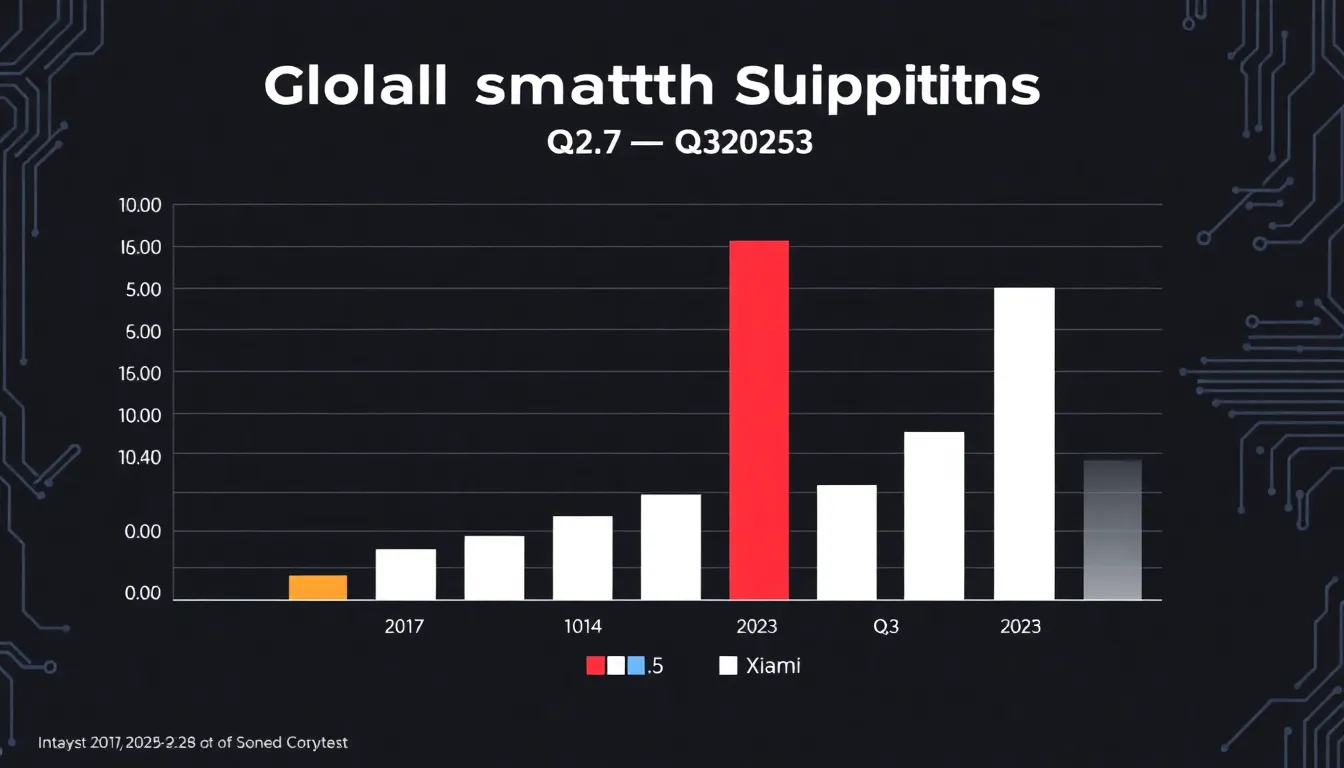
Huawei Leads Global Smartwatch Market in Q1-Q3 2025, Xiaomi Shows Fastest Growth
The global market for wrist-worn smart devices, encompassing both smartwatches and fitness trackers, has demonstrated robust growth during the first three quarters of 2025. Shipments exceeded 150 million units, marking a 10% increase compared to the same period last year. Within this category, smartwatches accounted for nearly 120 million units, growing by 7.3% year-on-year, while simpler fitness trackers saw a more significant surge of 21.3%, reaching 32.86 million units.
Huawei Secures Top Position with Strong Domestic Performance
Huawei emerged as the global leader in smartwatch shipments for the January-September period, delivering 28.6 million units worldwide. The company's success was significantly bolstered by its performance in the Chinese market, which accounted for 20.8 million of those shipments. Models like the Huawei Watch GT 6 and Watch GT 6 Pro were key contributors to this achievement. While Huawei's dominance is currently concentrated in its home market, there are indications the company is actively working to expand its international footprint.
Xiaomi's Rapid Ascent and Market Strategy
Claiming the number two spot globally, Xiaomi distinguished itself as the fastest-growing manufacturer among the top five. The company shipped 27.9 million units, driven by strong demand for its affordable product lineup. Popular devices such as the Xiaomi Smart Band 10 and various Redmi Watches resonated with cost-conscious consumers. Xiaomi's growth was not limited to China; the brand also established a notable presence in emerging markets across Southeast Asia and South America, showcasing a successful strategy of targeting value-oriented segments worldwide.
Competitive Landscape and Future Trends
The competitive landscape saw Apple holding the third position globally, though it ranked fourth within the Chinese market. Apple's focus remains on the mid-range to premium segments, with recent emphasis on advancing connectivity features like 5G and satellite messaging. Samsung, positioned fourth globally, experienced a decline in the first half of the year but regained momentum in the third quarter following the launch of its Galaxy Watch8 series.
Looking ahead, industry analysis suggests that advanced connectivity, the integration of AI applications, and increasingly sophisticated health-tracking capabilities will be the primary drivers of growth in the coming year. These developments are expected to shape product roadmaps across all major manufacturers.
Conclusion
The first three quarters of 2025 have solidified Huawei's position at the forefront of the global smartwatch market, largely powered by its domestic strength. Simultaneously, Xiaomi's aggressive growth highlights the significant demand for affordable, feature-rich wearables, particularly in emerging economies. As the market continues to expand, innovation in connectivity and health technology is poised to define the next phase of competition among these leading tech giants.