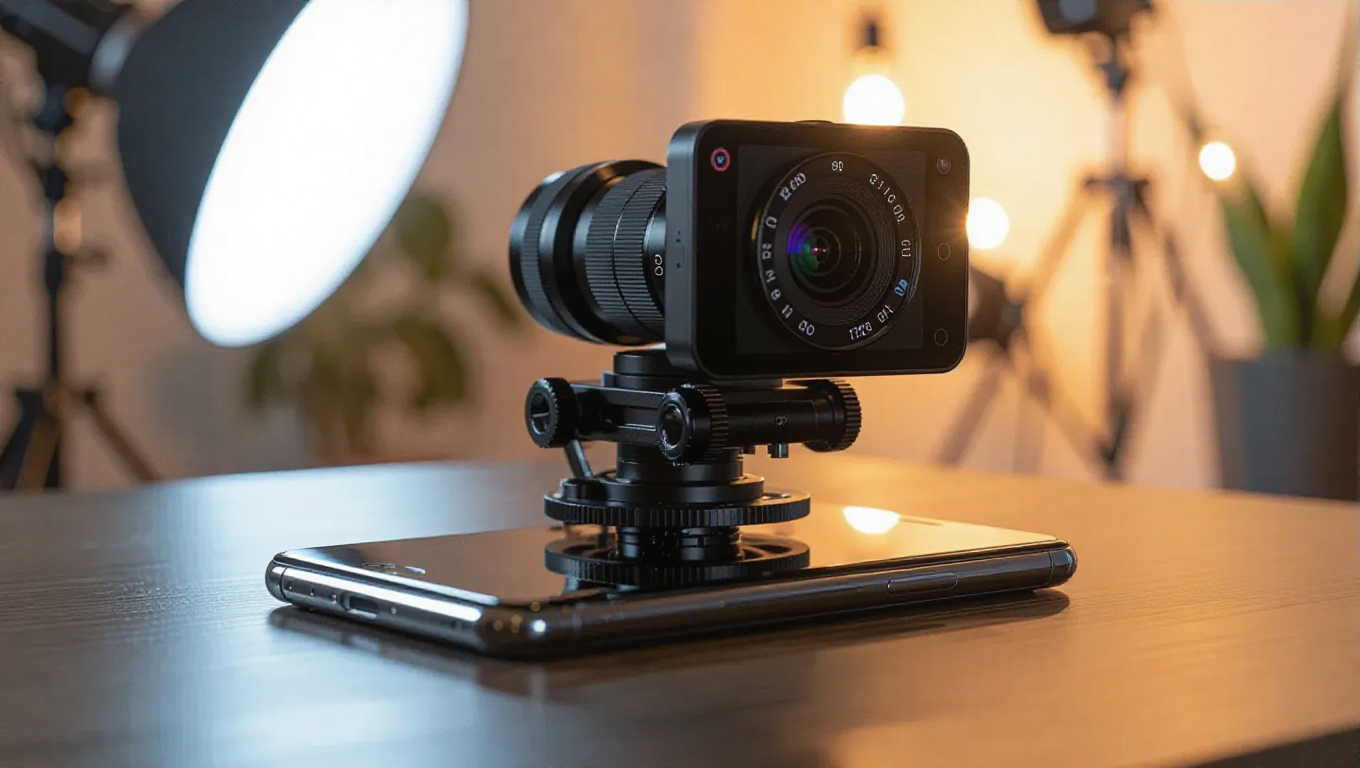
HONOR's Robot Phone: Early Look at Smartphone with Built-In Camera Gimbal
In an industry where innovation often means incremental improvements to camera sensors or processor speeds, HONOR is taking a radically different approach. The company is developing what it calls the "Robot Phone"—a smartphone with a fully integrated camera gimbal system built directly into the device. While still in prototype stage, this technology represents one of the most significant hardware innovations in mobile photography in recent years.
The Hardware Innovation
The prototype device features a mechanical gimbal system that physically stabilizes the camera module. Unlike traditional optical or electronic image stabilization, which relies on lens movement or software algorithms, this system uses actual mechanical stabilization similar to professional camera gimbals. The technology allows for smoother video recording, better low-light performance through longer exposure times, and potentially revolutionary capabilities for mobile content creation.
Early observations suggest the gimbal mechanism is surprisingly compact, integrated within the phone's chassis without significantly increasing thickness. The system appears to operate automatically, adjusting to movement in real-time to maintain stable footage. This represents a significant engineering achievement, as fitting a mechanical stabilization system into a smartphone form factor presents numerous challenges related to space, power consumption, and durability.
Potential Applications and Impact
The implications for mobile photography and videography are substantial. Content creators could potentially eliminate the need for external gimbals, making professional-quality stabilization available at all times. The technology might enable new shooting modes, improved night photography through longer stable exposures, and enhanced capabilities for action and sports photography.
Beyond photography, the mechanical stabilization could benefit augmented reality applications, improve scanning and document capture, and potentially enable new forms of user interaction. The system's ability to precisely control camera positioning opens possibilities for automated tracking, advanced panorama creation, and improved computational photography techniques.
Development Timeline and Market Position
The device is currently in development and not yet ready for consumer use. Reports indicate the technology will be finalized and officially launched at Mobile World Congress in 2026, with commercial availability expected shortly thereafter. This timeline suggests HONOR is taking a measured approach to ensure the technology is fully refined before release.
This innovation comes at a time when smartphone manufacturers are seeking meaningful differentiation beyond processor speeds and camera megapixel counts. While foldable displays and satellite connectivity have emerged as notable innovations, a built-in camera gimbal represents a fundamentally different approach to improving the core smartphone experience.
Conclusion
HONOR's Robot Phone prototype represents a bold step forward in smartphone camera technology. By integrating mechanical stabilization directly into the device, the company is addressing a fundamental limitation of mobile photography—camera shake—through hardware innovation rather than software optimization alone. While questions remain about battery impact, durability, and final implementation, the technology demonstrates genuine innovation in an industry that often settles for incremental improvements.
The success of this approach will depend on execution, pricing, and whether the benefits justify any compromises in form factor or battery life. However, as a proof of concept, the Robot Phone suggests that meaningful hardware innovation in smartphones is still possible, potentially opening new avenues for mobile content creation and photography.