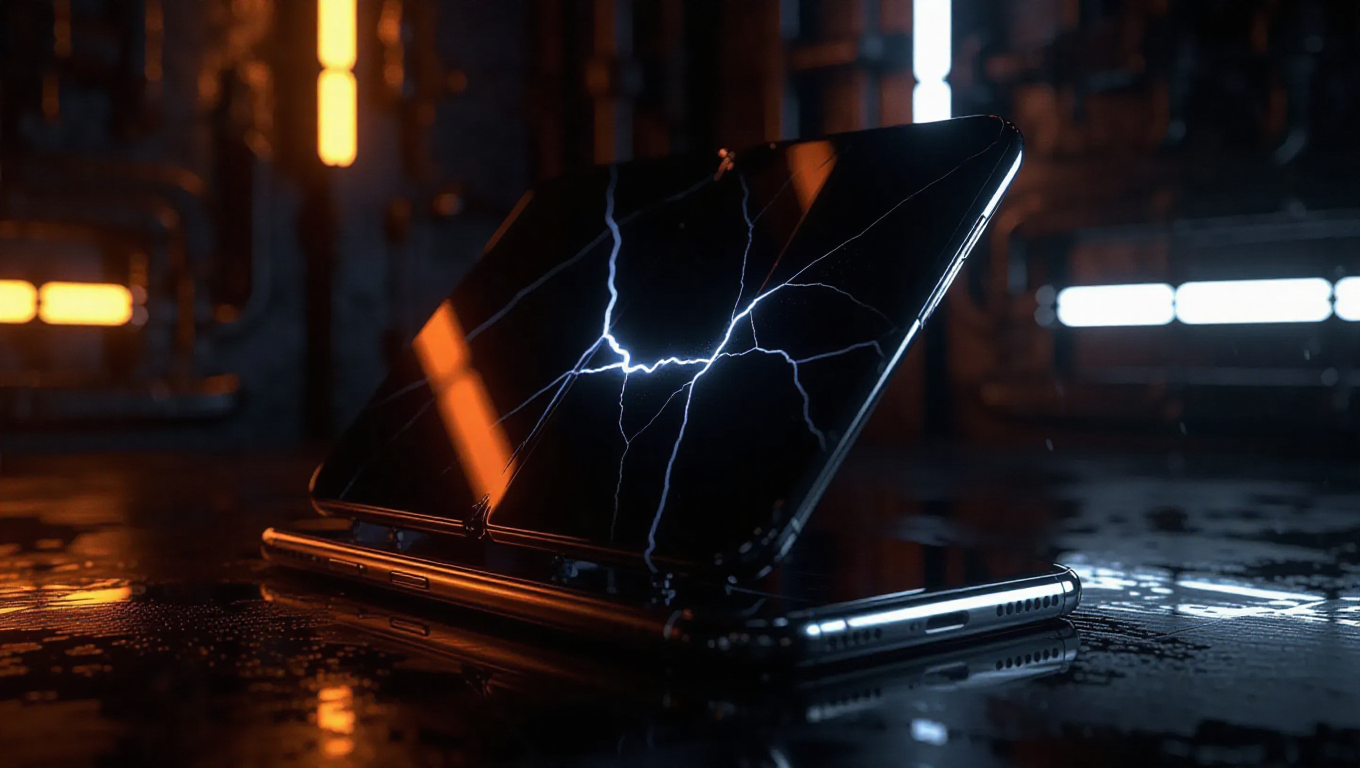
Galaxy Z TriFold Durability Tested: Bends and Breaks Under Extreme Pressure
Samsung's first tri-folding smartphone has undergone rigorous durability testing, revealing significant vulnerabilities when subjected to extreme conditions. While the company claims robust construction for everyday use, the device demonstrated clear limitations in a comprehensive torture test.
Extreme Testing Methodology
The Galaxy Z TriFold faced a series of extreme challenges designed to push the device beyond normal usage scenarios. The test included exposure to direct heat from a cigarette lighter, which resulted in pixel burn on both the foldable OLED screen and the cover display. The rear plastic panel showed susceptibility to scratches, while the metal frame, though strong, proved vulnerable to pressure from sharp knives—a characteristic shared with many premium smartphones.
Hinge and Structural Weaknesses
After sand was introduced into the hinge mechanism and the device was repeatedly folded and unfolded, the hinges began emitting concerning crunching and grinding sounds. The most dramatic failure occurred when the phone was bent in an unnatural direction, causing immediate structural failure. The screen pixels tore and the display ceased functioning entirely.
The Armour Aluminum frame, while marketed as durable, appears less robust than the frame used on the Galaxy Z Fold 7. Its thin construction contributed to bending along the antenna line during the stress test.
Manufacturer Claims vs. Test Results
Samsung maintains that the Galaxy Z TriFold underwent vigorous testing based on common usage patterns. The company asserts the device can withstand 200,000 folding cycles, with third-party testing confirming durability up to 144,000 folds. However, these claims contrast with the extreme test results, which suggest the tri-folding design introduces new structural vulnerabilities not present in more mature bi-folding models.
Context and Practical Implications
It's important to note that the torture test represents conditions far beyond typical smartphone usage. Most consumers will never subject their devices to such extreme treatment. The Galaxy Z Fold 7, now in its seventh generation, demonstrated superior resilience in similar testing, withstanding pressure without bending or breaking.
The results highlight the engineering challenges inherent in tri-folding designs, which require more complex hinge mechanisms and thinner structural components to accommodate additional folding points. While the Galaxy Z TriFold represents an ambitious step forward in foldable technology, its durability under extreme conditions suggests there may be trade-offs between innovation and robustness in first-generation designs.
Conclusion
The Galaxy Z TriFold's performance in extreme durability testing reveals the inherent challenges of pioneering tri-folding smartphone technology. While the device meets manufacturer specifications for normal use, its structural vulnerabilities under extreme pressure indicate that tri-folding designs may require further refinement to match the durability of established bi-folding models. As foldable technology continues to evolve, balancing innovative form factors with robust construction remains a key challenge for manufacturers.