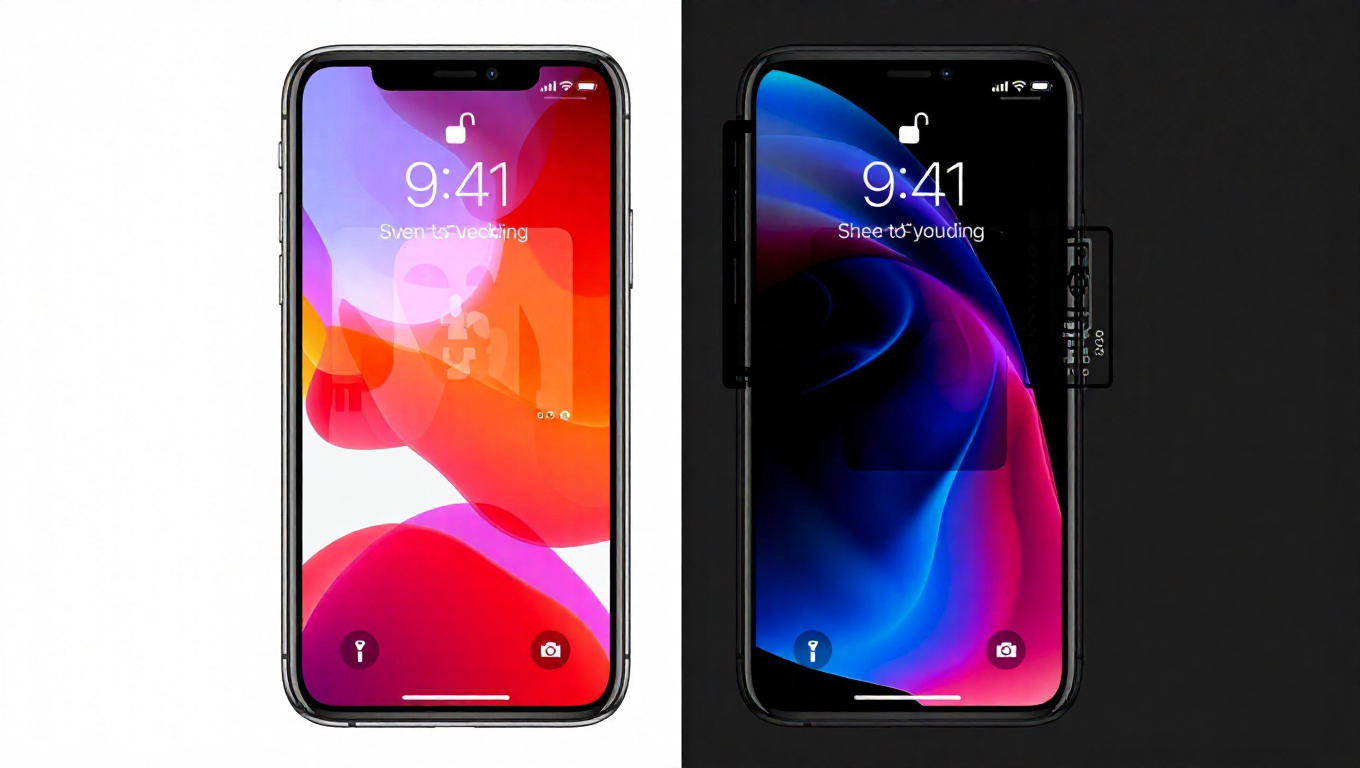
Galaxy S26 Ultra Privacy Display vs. Screen Protectors: Which Offers Better Privacy?
The Galaxy S26 Ultra introduces a novel Privacy Display feature that represents a hardware-level approach to screen privacy. Unlike traditional solutions that rely on external accessories, Samsung's implementation controls light dispersion at the pixel level to obscure content from side angles. This raises an important question: can this built-in technology outperform the physical privacy screen protectors that have dominated the market for years?
Testing Methodology and Results
In a comparative analysis, the Privacy Display feature was tested against a high-quality, branded privacy screen protector applied to a previous-generation device. The testing revealed distinct advantages and trade-offs for each approach.
Physical privacy screen protectors demonstrated superior side-angle privacy performance, creating a more complete "blackout" effect that made screen content virtually invisible from oblique viewing angles. This traditional solution effectively prevents visual eavesdropping in crowded environments like public transportation or coffee shops.
However, this enhanced privacy comes with significant usability compromises. Privacy screen protectors permanently dim the display, reducing brightness and color vibrancy even when privacy isn't needed. Additionally, these protectors feature a matte texture that creates friction during touch interactions, preventing the smooth finger glide that users expect from modern smartphone glass.
The Privacy Display Advantage
Samsung's Privacy Display technology offers a fundamentally different user experience. As a hardware feature integrated into the display itself, it allows users to toggle privacy on demand rather than living with permanent compromises. This flexibility enables selective privacy application—users can activate the feature for specific apps or screen areas while maintaining normal viewing for other content.
The Privacy Display maintains the smooth glass surface that users prefer, preserving the premium tactile experience of the device. While its side-angle privacy effect may be slightly less absolute than that of physical protectors, the trade-off favors usability and convenience for most real-world scenarios.
Practical Considerations
The choice between these privacy solutions depends largely on individual priorities and usage patterns. For users who require maximum privacy in all situations and are willing to accept permanent display dimming and texture changes, physical screen protectors remain a viable option. These also provide the additional benefit of screen protection against scratches and minor impacts.
For most users, however, the Privacy Display offers a more balanced solution. The ability to activate privacy only when needed—during sensitive transactions, while viewing confidential documents, or in crowded spaces—provides practical protection without compromising daily usability. The feature integrates seamlessly with the device's software, allowing for quick activation through settings or shortcuts.
Conclusion
The Galaxy S26 Ultra's Privacy Display represents a significant step forward in smartphone privacy technology. While physical screen protectors still offer marginally better side-angle privacy, they do so at the cost of permanent display quality degradation and compromised touch experience. Samsung's hardware-level solution provides a more sophisticated approach that balances privacy needs with overall user experience.
For consumers prioritizing convenience, flexibility, and premium usability, the Privacy Display offers a compelling alternative to traditional privacy accessories. As display technology continues to evolve, this type of integrated privacy feature may become the standard approach for protecting sensitive information on mobile devices.