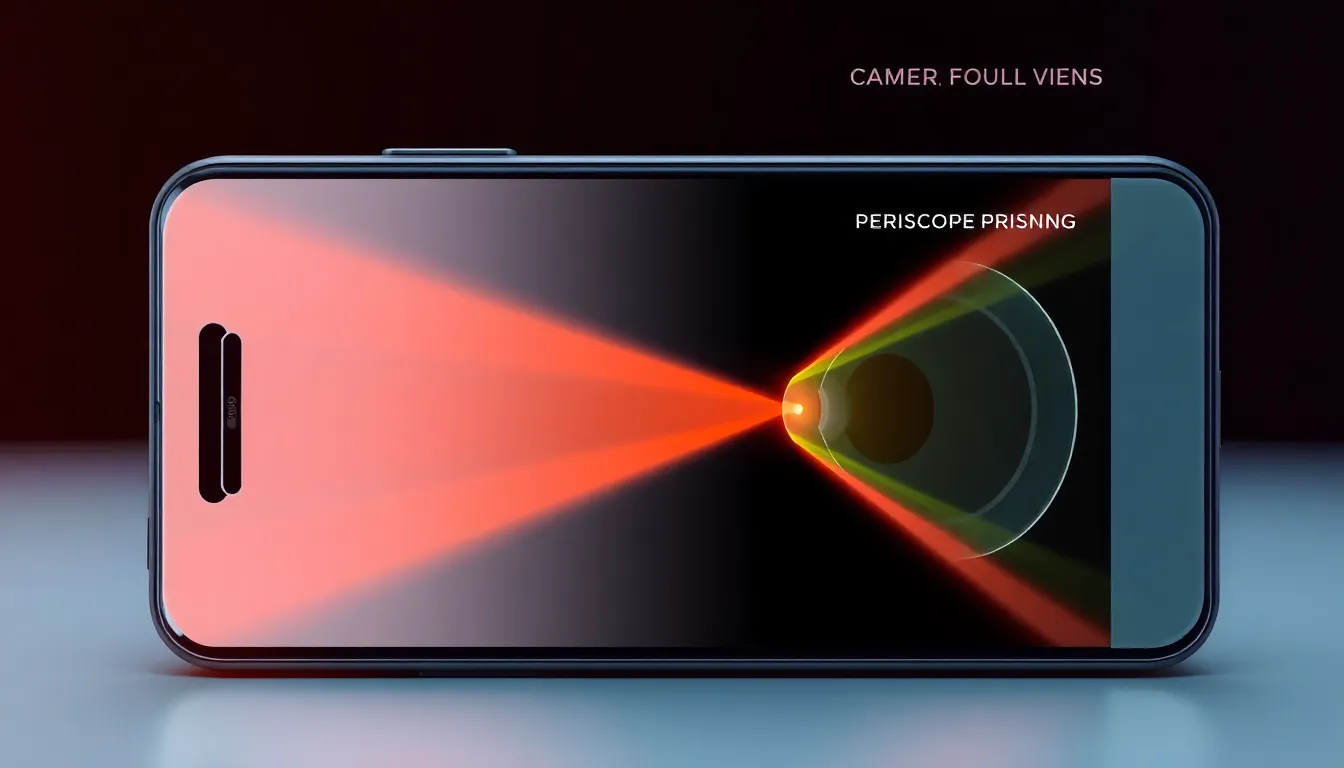
The Galaxy S26 Ultra Doesn't Use a Periscope Zoom Lens - Here's Why That Matters
Samsung's latest flagship, the Galaxy S26 Ultra, brings several camera upgrades including a wider-aperture 200MP main sensor and 50MP 5x telephoto module. However, one significant change has gone largely unmentioned in official marketing materials: the telephoto camera has abandoned the periscope lens design used in previous models.
A Fundamental Lens Design Shift
The Galaxy S25 Ultra employed a periscope lens system, which uses a prism to bend light 90 degrees, allowing for longer focal lengths within a smartphone's slim profile. This design has become standard for high-magnification telephoto cameras in premium devices. The S26 Ultra, in contrast, returns to a traditional lens arrangement where optical elements and sensor align parallel to the phone's body.
This architectural change has immediate practical consequences. The minimum focus distance of the S26 Ultra's 5x camera measures 52cm, exactly double the 26cm capability of the S25 Ultra. For photographers who frequently use telephoto lenses for close-up shots or detailed compositions of nearby subjects, this represents a tangible limitation.
Visual Trade-offs: Bokeh and Low-Light Considerations
The lens redesign alters optical characteristics beyond focus distance. Traditional lenses produce circular bokeh shapes—the aesthetic quality of out-of-focus background elements—that remain mostly round in the image center and gradually distort toward the edges. Periscope systems, by contrast, create rectangular bokeh patterns that many photographers find less visually pleasing.
Simultaneously, the S26 Ultra's telephoto camera features a wider f/2.9 aperture compared to the S25 Ultra's f/3.4, theoretically enabling better low-light performance by capturing more light. While comprehensive image quality comparisons await full testing, the aperture improvement suggests Samsung prioritized low-light capability over close-focusing ability.
Why This Design Choice Matters
Smartphone camera systems represent carefully balanced compromises between size, cost, and performance. The periscope-to-traditional lens shift in the S26 Ultra illustrates how manufacturers continually re-evaluate these trade-offs. For users who primarily employ telephoto capabilities for distant subjects like landscapes or architecture, the change may be inconsequential or even beneficial due to improved bokeh quality. However, photographers who value macro-style telephoto work will notice the reduced close-focus capability.
Official documentation confirms the omission of periscope terminology, with Samsung emphasizing only general low-light improvements. This suggests the company views the lens redesign as part of a holistic optimization rather than a headline feature—a pragmatic approach that prioritizes specific photographic scenarios over maintaining previous design conventions.
Conclusion: A Calculated Compromise
The Galaxy S26 Ultra's lens redesign represents a deliberate engineering choice that exchanges close-focus versatility for potentially better low-light performance and more pleasing bokeh characteristics. While not universally advantageous, this change reflects how smartphone manufacturers continuously refine camera systems based on evolving user needs and technological constraints. As computational photography advances, such hardware decisions increasingly work in tandem with software processing to deliver balanced photographic experiences—even when that means stepping away from established industry norms.