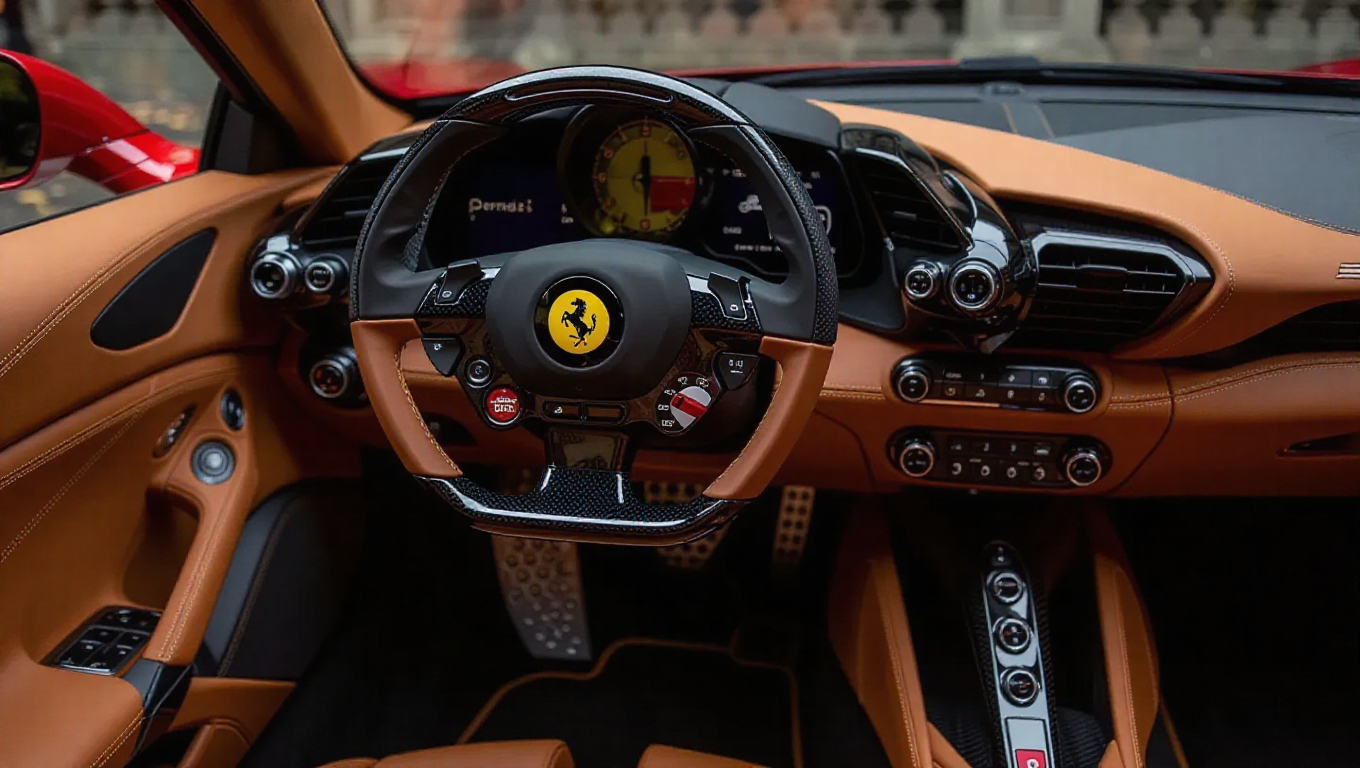
Ferrari Luce Interior Blends Ex-Apple Design with Samsung OLED Innovation
Ferrari has unveiled the interior of its first fully electric production car, the Luce, revealing a collaboration that brings together design expertise from former Apple design chief Jony Ive and display technology innovation from Samsung. The result is an interior that represents a significant departure from traditional automotive design while maintaining Ferrari's signature focus on driver engagement.
A Design Legacy Meets Automotive Innovation
The Ferrari Luce's interior bears the unmistakable influence of Jony Ive's design firm LoveFrom, which handled the overall interior design. This marks one of the most significant automotive design projects for Ive since leaving Apple, bringing his minimalist, user-focused approach to the world of high-performance vehicles. The interior appears to successfully blend analog and digital elements, creating a space that feels both modern and timeless.
Reports indicate that Ferrari has returned to physical controls for key functions, a move that many driving enthusiasts will appreciate. This approach contrasts with the trend toward fully digital, touchscreen-heavy interfaces that have dominated recent automotive design. The physical controls are complemented by digital displays that enhance rather than overwhelm the driving experience.
Groundbreaking Display Technology
The most technically innovative aspect of the Luce's interior is its instrument cluster, developed in collaboration with Samsung Display engineers. This represents a world-first implementation of stacked OLED displays in an automotive application. The cluster consists of two overlapping OLED panels mounted on the steering column, with the top display featuring three large cutouts that reveal information from the second display beneath.
This stacked display concept creates a subtle sense of depth and three-dimensionality, with clear glass lenses protecting the cutouts. Samsung Display engineers worked closely with Ferrari to develop ultra-light, ultra-thin OLED panels specifically for this application. The technology allows for a more integrated and visually interesting display solution than traditional flat screens.
Balancing Tradition and Technology
The Luce's interior represents a careful balance between Ferrari's racing heritage and cutting-edge technology. While specific details about other screens in the interior remain unclear, the instrument cluster alone demonstrates how display technology can be integrated in ways that serve both functional and aesthetic purposes. The design appears confident in its blending of classic automotive elements with modern digital interfaces.
Early impressions suggest the interior successfully avoids the cold, overly digital feel that sometimes accompanies high-tech automotive interiors. Instead, it appears to create a warm, engaging environment that puts the driver at the center of the experience while providing all the information and control expected in a modern supercar.
Conclusion
The Ferrari Luce's interior represents a significant moment in automotive design, bringing together expertise from consumer electronics and traditional automotive engineering. The collaboration between LoveFrom and Samsung Display has produced an interior that feels both innovative and appropriate for a Ferrari. The stacked OLED instrument cluster represents a genuine technological advancement that could influence future automotive display design.
As Ferrari prepares to launch its first electric vehicle by the end of 2026, the Luce's interior suggests the company is approaching electrification with the same attention to detail and driver focus that has defined its combustion-engine vehicles. The integration of Samsung's OLED technology with LoveFrom's design philosophy creates an interior that promises to be as engaging to use as the car will be to drive.