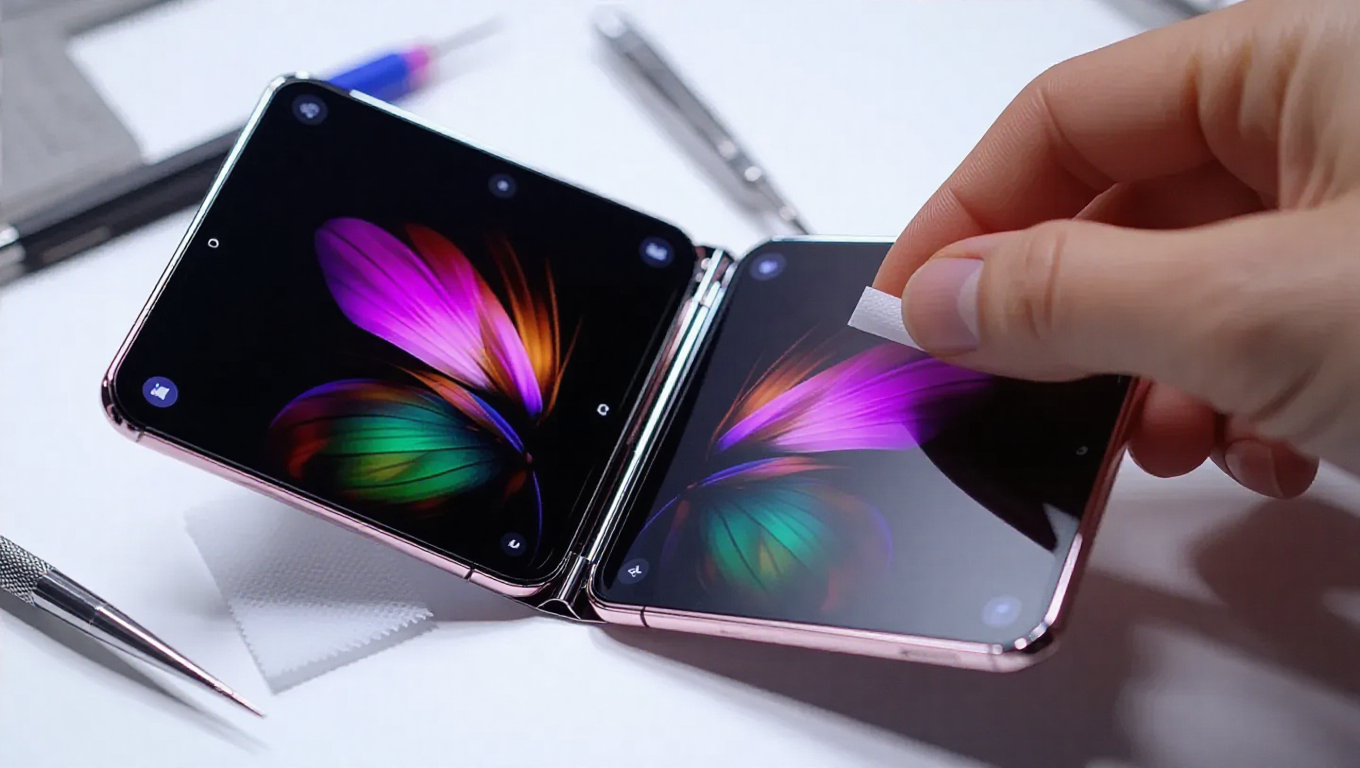
DIY Galaxy Fold Screen Protector Replacement: Lessons from a Risky Attempt
Foldable smartphones have evolved significantly over the past seven years, becoming thinner, lighter, and more refined. However, one aspect that remains consistent is the reliance on pre-applied screen protectors for the flexible inner displays. While these protectors have improved, they eventually wear out and require replacement. Manufacturers typically advise professional installation, but one adventurous user decided to tackle the job on their Galaxy Z Fold 4, asking, "How hard can it be?" The experience offers valuable insights for other foldable owners.
The Challenge of Foldable Screen Protectors
Replacing a screen protector on a foldable phone is far more complex than on a traditional smartphone. The flexible inner screen requires a specialized protector that can withstand repeated folding without bubbling, peeling, or cracking. These protectors are designed to be ultra-thin and perfectly aligned to avoid interfering with the hinge mechanism. Reports indicate that improper installation can lead to air bubbles, misalignment, or even damage to the underlying display, which is costly to repair. The process demands precision, patience, and the right tools, as even minor errors can compromise the phone's functionality.
A Personal Experiment and Its Pitfalls
In this case, the user attempted the replacement after noticing the original protector lifting at the edges. The DIY approach involved carefully peeling off the old protector, cleaning the screen thoroughly to remove dust and adhesive residue, and applying a new one. However, challenges arose immediately: aligning the protector perfectly proved difficult due to the screen's curved edges and hinge area, and tiny dust particles trapped during application created visible imperfections. The user noted that the new protector did not adhere as smoothly as the factory-installed version, leading to minor bubbling along the crease. This experience underscores why manufacturers recommend professional service, as trained technicians use controlled environments and specialized equipment to ensure a flawless fit.
Key Takeaways for Foldable Owners
Based on this attempt, several lessons emerge for those considering a similar DIY project. First, assess the risk: if the phone is under warranty, self-replacement might void it, and any damage could result in expensive repairs. Second, source high-quality replacement protectors designed specifically for the model, as generic ones may not fold correctly or offer adequate protection. Third, prepare a dust-free workspace and use tools like microfiber cloths and alignment guides to improve accuracy. Finally, consider the trade-off: while DIY can save time and money, professional installation often guarantees better results and preserves device integrity. For most users, seeking authorized service remains the safest option.
Conclusion
Replacing a Galaxy Fold's inner screen protector independently is a daunting task that highlights the unique engineering of foldable devices. While it is technically possible, the process requires meticulous care and carries significant risks of subpar results or damage. This experience serves as a cautionary tale, emphasizing that some aspects of modern technology are best left to experts. As foldables continue to advance, users should weigh convenience against potential consequences, opting for professional help to maintain their device's longevity and performance. In the end, the question "How hard can it be?" yielded a clear answer: harder than expected, and not without pitfalls.