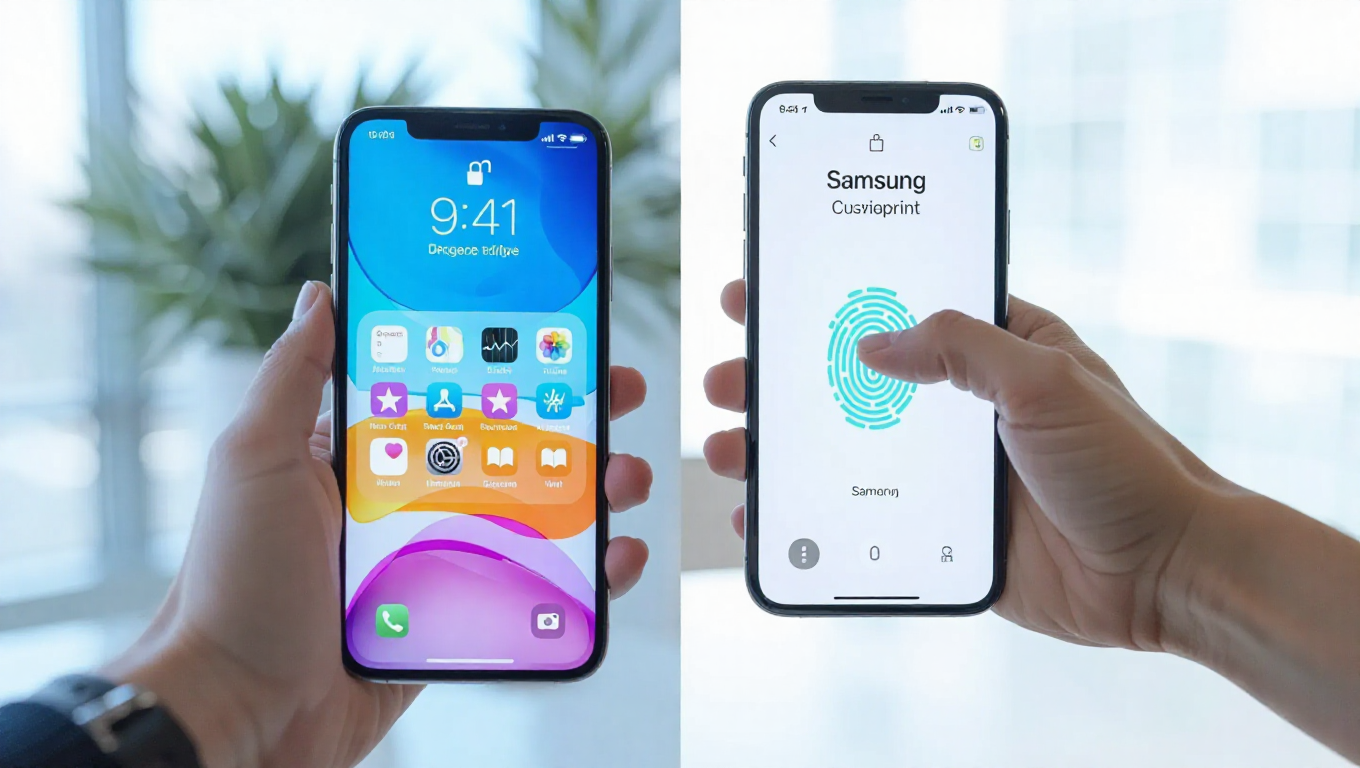
Apple vs Samsung Mobile Security: A Decade of Biometric Evolution
The past decade has witnessed a fundamental divergence in how Apple and Samsung approach mobile device security. What began as parallel explorations of biometric authentication has evolved into two distinct philosophies, each with its own strengths and compromises.
The Security Divide
Around 2017-2018 marked a pivotal moment for both manufacturers. Apple introduced Face ID in late 2017, implementing sophisticated 3D facial mapping technology that represented a significant departure from previous authentication methods. Meanwhile, Samsung was shipping its final flagship with iris scanning technology, the Galaxy Note 9, before shifting entirely to fingerprint-based authentication.
Today, the contrast is stark. Apple continues to refine and double down on Face ID, while Samsung has standardized on under-display fingerprint scanners across its premium Galaxy lineup. This divergence reflects different priorities in balancing security, convenience, and design considerations.
Face ID: Security with Compromises
Apple's facial recognition system offers notable security advantages in specific scenarios. The technology's ability to detect whether eyes are open provides protection against unauthorized access when a user is unconscious or asleep. This attention-aware feature creates a higher barrier against certain types of unauthorized access compared to fingerprint systems.
However, Face ID comes with design trade-offs. The technology requires a substantial display cutout, which impacts screen aesthetics and usable space. Additionally, the system can struggle with significant appearance changes and may be less convenient in certain situations where facial recognition isn't optimal.
Fingerprint Scanning: Practical Reliability
Samsung's commitment to under-display fingerprint readers represents a different calculus. While potentially less secure than Face ID in specific edge cases, fingerprint authentication offers consistent reliability and convenience. The technology works reliably across various conditions and doesn't require precise facial positioning or ideal lighting.
The under-display implementation allows for smaller screen cutouts and maintains a cleaner aesthetic. For most everyday use cases, fingerprint scanning provides sufficient security while maximizing convenience—a balance that appears to align with Samsung's design philosophy.
The Iris Scanning Interlude
Interestingly, Samsung's late-2010s approach with iris scanning represented what some considered the most secure biometric option available at the time. In theory, iris recognition offered superior security to both fingerprint and facial recognition systems. However, practical limitations—including slower authentication times, sensitivity to glasses and lighting conditions, and the need for precise positioning—ultimately led Samsung to abandon this approach in favor of more user-friendly alternatives.
Conclusion: Different Paths, Different Priorities
Over the past decade, Apple and Samsung have charted different courses in mobile security. Apple's Face ID prioritizes maximum security in specific scenarios, accepting certain design compromises to achieve this goal. Samsung's fingerprint-based approach emphasizes practical reliability and design flexibility, offering sufficient security for most users' needs.
Neither approach represents an absolute "better" choice—rather, they reflect different philosophies about balancing security, convenience, and design. Apple's solution may offer superior protection in edge cases, while Samsung's approach provides more consistent everyday performance. As both companies continue to innovate, the evolution of mobile security remains one of the most fascinating battlegrounds in smartphone technology.