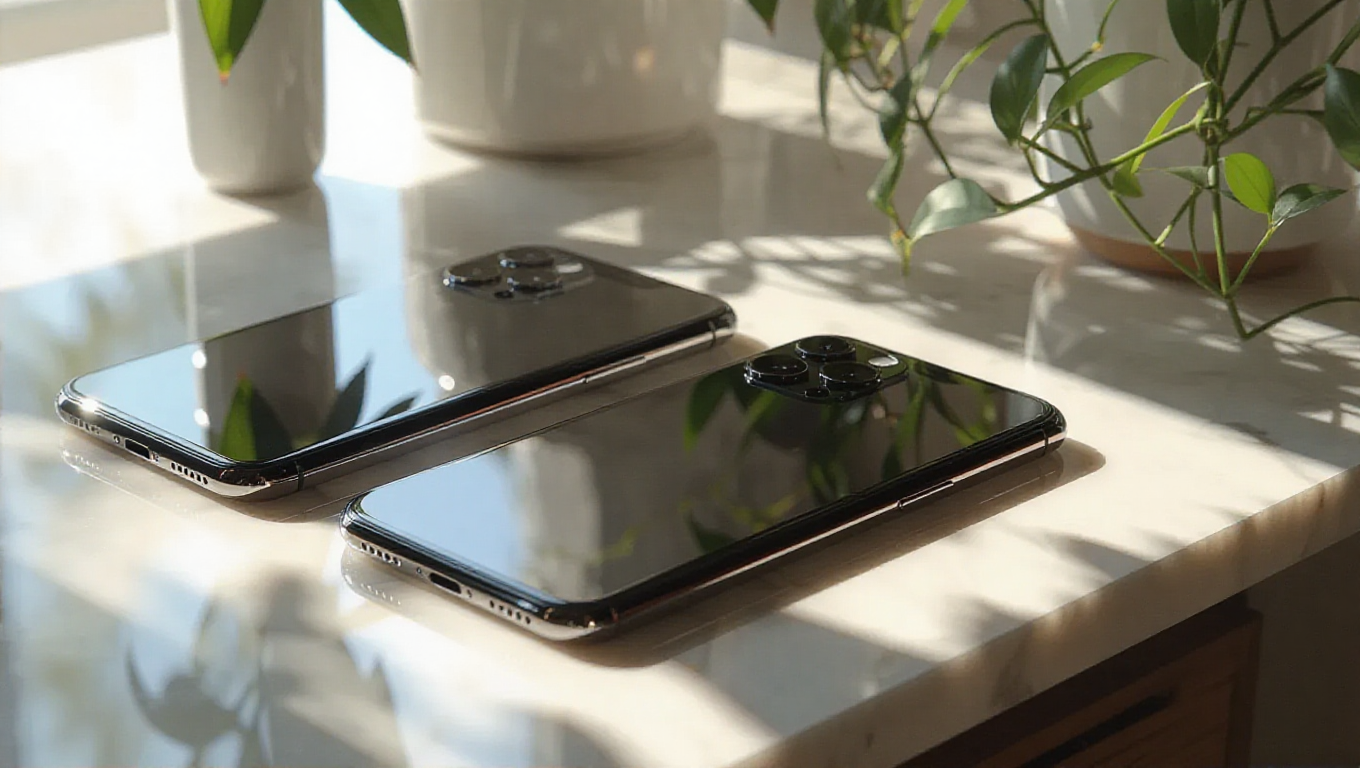
Apple iPhone 17 vs. iPhone 16: A Meaningful Generational Leap
Apple's annual iPhone refresh often brings incremental improvements, but the transition from iPhone 16 to iPhone 17 appears more substantial than typical year-over-year updates. While maintaining the familiar design language that has defined recent standard iPhones, the newer model introduces several key enhancements that collectively create a more modern and complete user experience.
Design and Build: Subtle Evolution
The iPhone 17 maintains the clean, classic aesthetic that has become Apple's signature for its mainstream devices. At 177 grams and measuring 149.6 x 71.5 x 8.0 mm, it's slightly larger and heavier than the iPhone 16's 170 grams and 147.6 x 71.6 x 7.8 mm dimensions. These differences are barely perceptible in daily use, with both devices offering the same balanced, pocket-friendly feel.
Both models feature aluminum frames with flat glass panels protected by Ceramic Shield glass and maintain IP68 water resistance. Unlike the Pro models, neither device receives dramatic styling changes or premium materials like titanium, resulting in a conservative but familiar design approach.
Display: The Most Significant Upgrade
The display represents the iPhone 17's most substantial improvement. After years of 60Hz panels on standard models, Apple has finally equipped the iPhone 17 with a 120Hz LTPO Super Retina XDR OLED display. This 6.3-inch panel (up from 6.1 inches on the iPhone 16) features adaptive refresh rates down to 1Hz, enabling Always On Display functionality while providing the smooth scrolling experience previously reserved for Pro models.
Both displays maintain excellent color accuracy, HDR performance, and 460 ppi sharpness, with the iPhone 17 offering 1206 × 2622 pixel resolution compared to the iPhone 16's 1179 × 2556 pixels. While maximum brightness capabilities are similar, the iPhone 17's anti-reflective coating helps reduce glare in bright conditions.
Performance and Battery Life
Performance improvements follow Apple's typical pattern of year-over-year processor upgrades, with the iPhone 17 benefiting from the latest A-series chip. Real-world usage shows noticeable but not revolutionary speed increases for most tasks.
Battery life sees meaningful improvement in the newer model. The iPhone 17 delivers approximately 10-15% longer endurance across various usage scenarios, including video playback, web browsing, and standby time. This enhancement comes despite the larger display and maintains Apple's reputation for reliable all-day battery performance.
Camera Capabilities
Camera improvements focus on computational photography enhancements rather than hardware changes. The iPhone 17 benefits from improved image processing algorithms that deliver better low-light performance, more accurate colors, and enhanced detail preservation. Video capabilities also see upgrades, particularly in stabilization and dynamic range.
Both devices maintain similar camera hardware configurations, with the iPhone 17's advantages coming primarily from software optimizations and processing improvements.
Conclusion: Worth the Upgrade?
The iPhone 17 represents one of the more meaningful generational steps in recent Apple history. The addition of a 120Hz LTPO display alone transforms the user experience, bringing features and smoothness previously exclusive to Pro models. Combined with improved battery life and camera enhancements, the iPhone 17 feels like a more complete and modern package than its predecessor.
For iPhone 16 owners, the upgrade may not be essential unless the display improvements are particularly compelling. However, for those coming from older devices or choosing between current models, the iPhone 17 offers tangible benefits that justify its position as Apple's latest mainstream offering. While design remains conservative, the internal improvements make this a substantial evolution rather than a minor refinement.