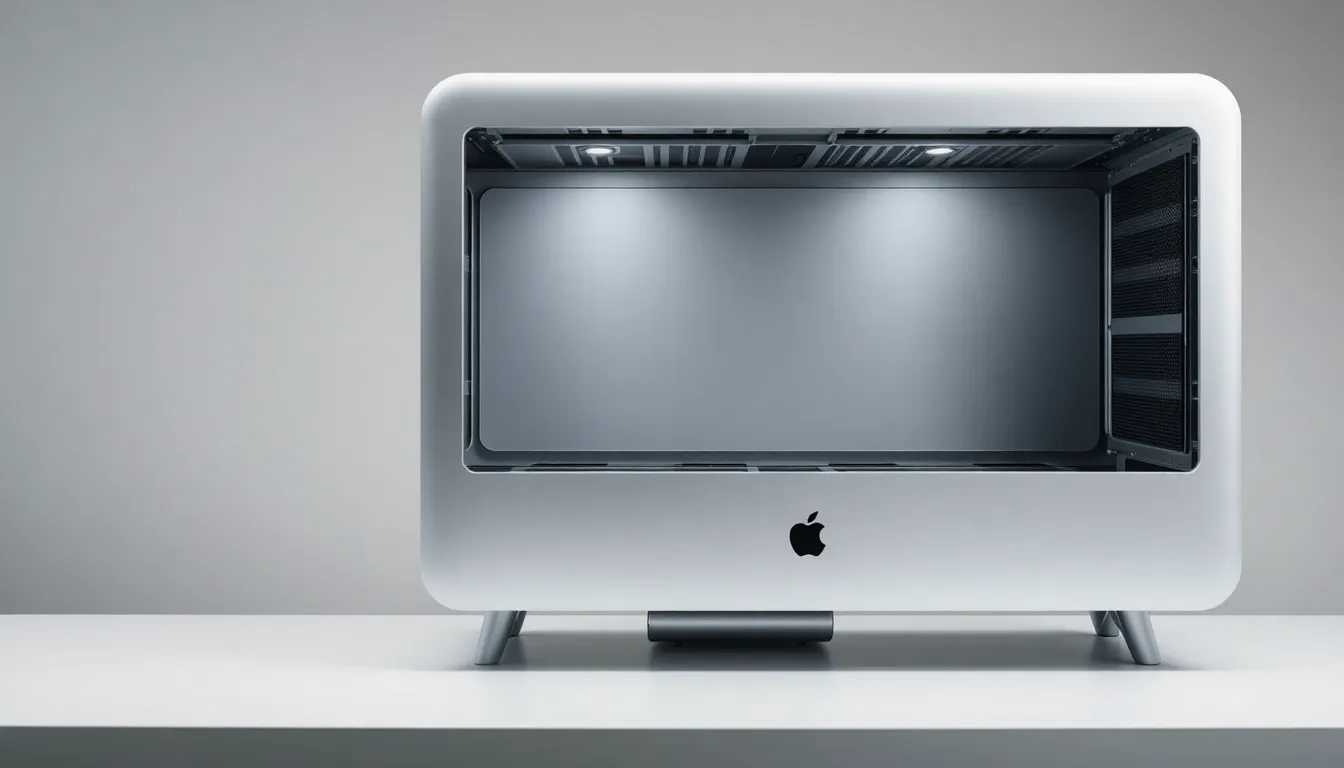
Apple Ends Mac Pro Line After Two Decades of Desktop Dominance
Apple has officially discontinued the Mac Pro, bringing an end to the twenty-year run of its flagship modular desktop computer. The company has removed the product from its website, signaling the conclusion of an era for professional users who relied on the expandable tower system.
The Evolution of a Professional Workhorse
The Mac Pro first launched in 2006 as a replacement for the Power Mac G5, establishing itself as a desktop tower with true modularity. Users could replace the CPU, memory, optical and storage drives, and PCI expansion cards, making it a favorite among professionals who required customizable hardware for demanding workflows.
This original tower design remained largely unchanged until 2013, when Apple introduced the controversial "trashcan" redesign. This compact model sacrificed much of the previous modularity, with only memory and storage being user-upgradeable. Thermal limitations eventually hampered this design's ability to accommodate more powerful components, leading to its eventual abandonment.
Return to Modularity and Final Transition
In 2019, Apple returned to the Mac Pro's modular roots with a design that allowed users to replace nearly every component except the CPU. This revision represented one of the final Intel-based computers in Apple's lineup as the company began transitioning to its own ARM-based M-series chips.
The Mac Pro received its M-series update in 2023 with the switch to the M2 Ultra chip, which would prove to be its final update. While modularity remained, the transition to Apple silicon limited compatibility with PCI expansion devices, reducing the computer's appeal to enthusiasts who valued extensive hardware customization.
The Mac Studio Takes the Crown
The Mac Pro's discontinuation follows its gradual replacement by the Mac Studio as Apple's most powerful desktop computer. The Mac Studio, while less modular than the Mac Pro, has become the flagship desktop in Apple's current range, receiving regular updates that the Mac Pro lacked in its final years.
Reports indicate Apple had been planning the Mac Pro's discontinuation for some time. The product's relevance had diminished within Apple's current strategy, which has moved away from modularity and upgradability in favor of integrated, optimized systems. The Mac Pro represented a design philosophy that no longer aligns with Apple's modern computing approach.
Legacy of an Industry Icon
Despite its discontinuation, the Mac Pro leaves behind a significant legacy in professional computing. For two decades, it served as a benchmark for desktop performance and modular design, earning a dedicated following among creative professionals, developers, and power users.
The computer's three distinct design eras—from the original tower to the controversial trashcan model and finally the 2019 modular return—reflect Apple's evolving approach to professional computing. Each iteration pushed boundaries in different ways, whether through raw power, compact design, or user customization.
While the Mac Pro may be gone, its influence on desktop computing and professional workflows will continue to be felt. The computer established standards for performance and expandability that shaped expectations for professional-grade systems across the industry.
Conclusion
The discontinuation of the Mac Pro marks the end of an era for Apple's modular desktop computing. After twenty years and three major redesigns, the professional workstation has been retired as Apple focuses on its integrated silicon strategy and the Mac Studio as its flagship desktop offering.
For professionals who valued the Mac Pro's expandability and raw power, its absence leaves a noticeable gap in Apple's lineup. However, the company's shift toward optimized, integrated systems reflects broader industry trends toward specialized hardware and software integration. The Mac Pro's legacy as a professional workhorse and design icon remains secure, even as Apple moves forward with new computing paradigms.