Android 16 Adoption Surges Among Tech-Savvy Users, Poll Reveals
In a surprising twist, a recent poll indicates that a majority of tech-savvy users have already migrated to Android 16, despite earlier reports of slow adoption. This contrasts with broader market data, highlighting how enthusiast communities often lead in software updates.
Poll Results: A Snapshot of Early Adopters
The poll, conducted among a tech-oriented audience, found that 62% of respondents are running Android 16 on their devices. Of these, 55% received the update over-the-air, while 7% acquired it through new phone purchases. This suggests that proactive updates, rather than just hardware turnover, are driving adoption in this segment.
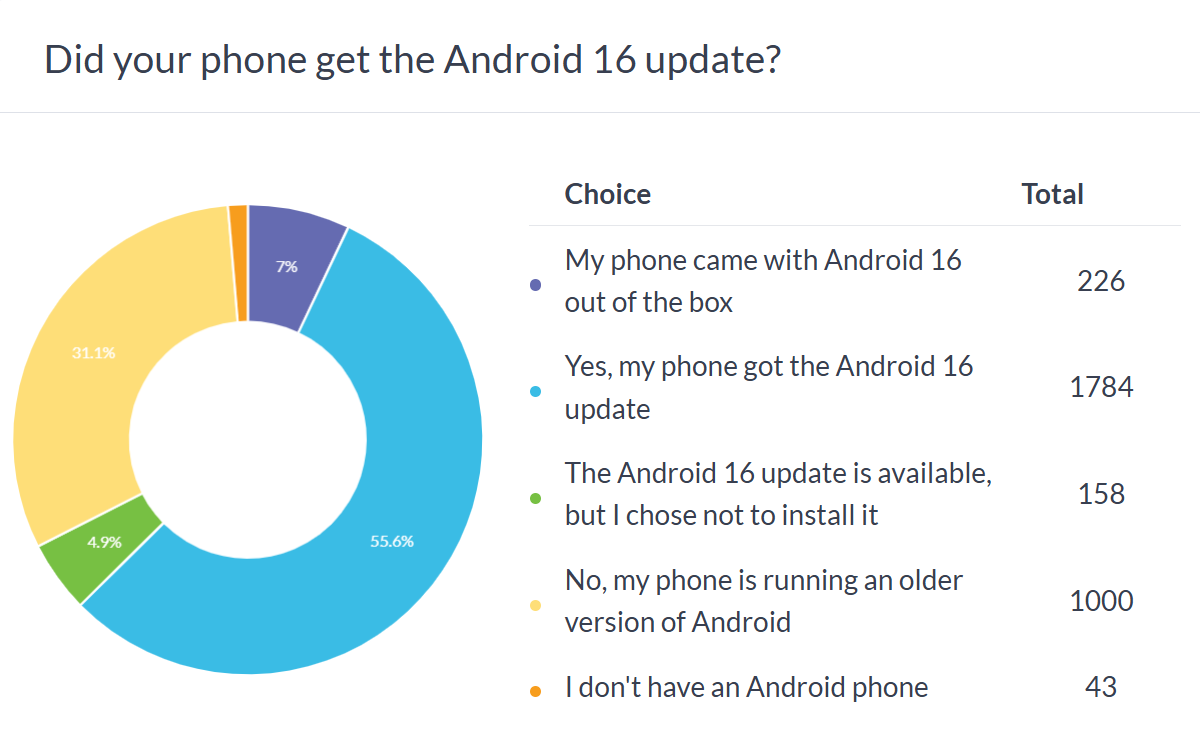
Approximately one-third of voters remain on older Android versions. Reasons vary: some are awaiting delayed rollouts from manufacturers, while others use devices that no longer receive support. This fragmentation underscores ongoing challenges in the Android ecosystem, where update timelines depend heavily on OEMs and carriers.
User Hesitations and the Custom ROM Niche
Interestingly, about 5% of poll participants intentionally stick with older Android versions. Feedback from comments reveals concerns that updates might remove features, degrade performance, or introduce unwanted UI changes. Some users feel that recent Android iterations offer minimal innovation, reducing the urgency to upgrade.
Beyond official channels, a small but dedicated group runs Android 16 via custom ROMs. While custom ROMs have declined as manufacturer UIs become more feature-rich, they persist among enthusiasts. However, the trend toward locked bootloaders in newer devices threatens this practice, potentially limiting future customization options.
Broader Implications for Android's Evolution
The poll results reflect a tech-forward audience that often outpaces general user trends. Early adoption can signal satisfaction with Android 16's stability and features, though the hesitations noted suggest areas for improvement in update transparency and user control.
As Android 17 enters beta testing, the rapid uptake of version 16 among polled users may indicate a healthy appetite for new releases, provided they deliver tangible benefits. Manufacturers might take note of the demand for timely updates to retain engaged users.
Conclusion
This poll offers a glimpse into how tech-savvy users navigate Android updates. While most have embraced Android 16, a significant minority remain cautious or constrained by support issues. The findings highlight the balance between innovation and user trust in the update process, with custom ROMs serving as a niche but fading alternative. As Android evolves, understanding these dynamics will be key for developers and manufacturers aiming to enhance user experience and adoption rates.